Showing posts with label Homosexuality. Show all posts

28/02/2013

Review: Call Me Kuchu

Originally published on www.biggaypictureshow.com
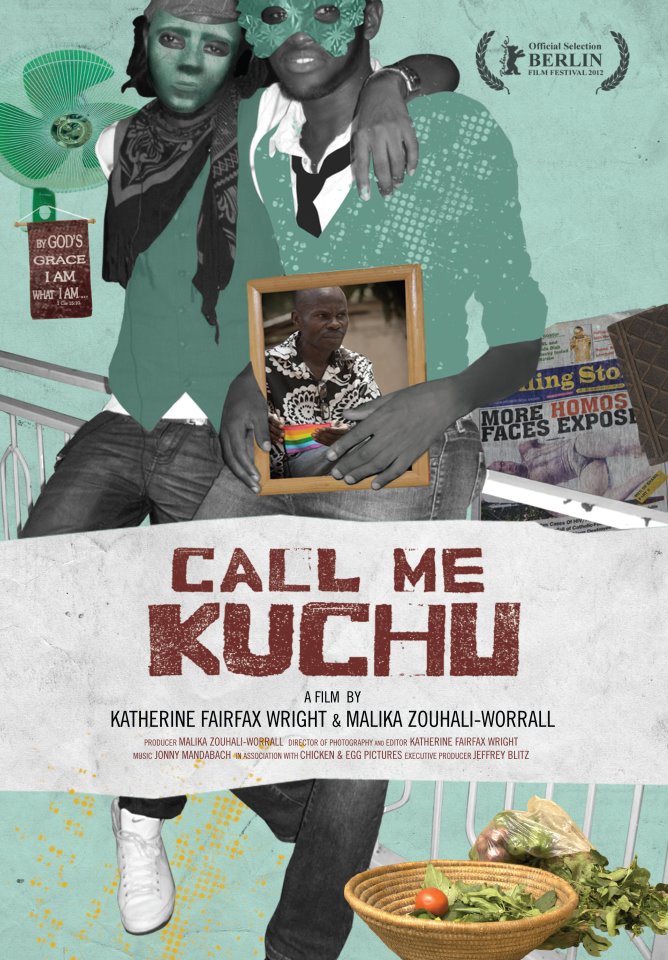

Call Me Kutchu takes an intimate and thought provoking look at the state of affairs for members of the LGBT community in Uganda, against the backdrop of the kill the gays bill.
In recent years the world has become aware of the negativity shown towards gay men and women in Uganda, and this film shows us what activists in the country are doing to try and make inequality a thing of the past. It also shows us the final year of gay rights activist David Kato towards the latter half of the film, which will evoke strong emotions from the audience, some of you may even cry.
The documentary is an eye opener for those of us who live in the West that don’t realise how easy life is compared to that of many around the world. In the documentary we hear a number of harrowing tales from a select group of gay people and activists in Uganda that range from violence, stoning, abandonment and even rape. Some of these tales will leave you open mouthed and shocked that nearly 50 years after gay liberation started, some people are still subjected to persecution on a daily basis. The realisation of just how severe things are in Uganda is shown when David Kato is murdered and the scene that ensues at his funeral.
One thing that is particularly good about this film is the way in which directors Katherine Fairfax Wright and Malika Zouhali-Worrall show us the debate on homosexuality in Uganda from both sides. We see the negative affects it has on people on a daily basis and what they are doing in the fight for equality, but they also enable us to see the mind-set of the people trying to oppress them and how they are targeting gay people. This is most evident when we are told by the managing editor of The Rolling Stone newspaper that in the name of journalism, they would ignore the right of privacy to expose gay people for public knowledge, and also how the paper itself links gay people to terrorism.
However against the sadness of the documentary you see hope in the LGBT community, as they enjoy themselves together and remain positive in a shared optimism that one day Uganda will be fully equal.
Overall the film is a touching and informative human tragedy that will have you engrossed from beginning to end, and cheer when you see just how much progress they are making. But as they mention throughout the film the struggle continues.

04/02/2013

There’s Still A Need To Cure Gays It Seems


Originally published on www.vadamagazine.com

For years now the issue of gay-cure therapy has been creeping into the news for one reason or another. The most common cause for it springing up is because some people adamantly believe that this type of therapy can work, despite a number of international health bodies saying that they are both ineffective and counter-productive, posing serious health threats to those treated.
The reason that I am bringing it up, as some of you may already know, is because at the end of January a debate surrounding therapy to cure gay people was held in a committee room within the Houses of Parliament. The event was hosted by Core Issues, who are a Christian group that have been critical of LGBT initiatives in the past. The debate itself looked at the subject of whether people should be allowed to change their sexual orientation, which they explained as ‘a debate about the legitimacy and freedom to offer sexual reorientation when many professional bodies are banning such therapies’.
Now I can’t be the only one who finds this completely and utterly insane, can I? Firstly, if you, like me, are gay then you will know that you’ve been gay for as long as you can remember. You may even remember things from when you were a child that make you go “oh yeah, I’ve always been gay.” My personal favourite is when I remember seeing Adam Rickitt’s music video for ‘I Breathe Again’ back in 1999. Yes I was only nine years old at the time, but I can remember watching that video with great intensity. I probably still would now.
I seem to have strayed a little off point there on my trip down memory lane, but if you do remember those times, then you’ll know that if you’re gay, then you’re gay and no amount of pretending to be straight can change that. The thought that this type of therapy can convert someone to being straight is preposterous. You couldn’t use therapy to convert someone from heterosexual to homosexual so how on earth do these people think that it can work in reverse?
Obviously we have all heard of ‘converting them to the cause’ which is a stupid joke about converting straight people into being gay. Some people, of the “backs against the wall lads” camp, still believe gay men and women are trying to do this. Seriously, it’s enough hassle sometimes as it is, without more of us (I joke).
But back to the point that has been made by other therapists: this gay cure therapy can be dangerous to the patients involved. This news about the debate comes during the week that it was revealed by a study from Université de Montréal and McGill University that coming out is actually good for you.
The study itself found that gay men and lesbians who came out were in better physical and mental health than both straight people and those who were still in the closet. Now I for one can believe this, as I assume many of you out there can, because when I came out it was like a great weight being lifted off my previously closeted shoulders. Many of my friends have said exactly the same.
However, the study did mention that it might only be beneficial for those in places where social attitudes and laws etc. are tolerant of gay people. If gay people are being told that they can cure themselves in a country such as Great Britain, where the laws for gay men and women are progressive, then what hope do people in other countries have? I worry that those who are still in the closet will see something like this and truly believe it. This could result in years of mental and possibly physical scarring through careless encouragement of denial, trying to resist something that can’t be changed.
It’s a sad state of affairs that in 2013 people are still churning out hate speech and proposing possible cures for homosexuality, when in actual fact we are perfectly normal. Society as a whole sees us as perfectly normal, and accepts that there’s nothing wrong with us. The bottom line of it is there’s nothing to cure.
Whilst the majority of us can go on laughing at these people who we may dub as ‘crazy’, just think about those who will be beating themselves up about the fact that they think they can change, or are subjected to intense pressure from those around them who believe the lies and denial. Others will take the presence of this debate as a validation of their bigotry and set about filling their minds with all kinds of homophobic nonsense. It makes you wonder how long it will be until the true issue of residual homophobia is cured from everyone’s minds and the reality of normality can break through.

05/10/2011

Icons: Truman Capote

Originally posted on www.differentscene.co.uk


This week in DS Icons section we are going to be taking a look at someone you may or may not have heard of; Truman Capote. Who I hear you ask?  Capote was an American author who wrote many short stories, nonfiction and plays during his 40-year career.

He spent much of his childhood moving around different places and was raised by a number of his family members. Capote began writing from a young age and said that it was something he would do when he finished school, so where as some children would have sport or the piano he had writing, and it’s a good job too he made a pretty good career out of it.
Truman Capote is also the inspiration behind the character of Dill in what is possibly one of the most famous books of all time, To Kill a mockingbird? This is due to his friendship with author Harper Lee at a very early age when they lived in the same neighborhood. You have to admit, that’s pretty remarkable that two extremely talented people were living in one place, and on top of that they were friends.
Capote shot to fame during the 1940s as he began to carve out a career for himself as a short story writer, and after one story caught the eye of a publisher it resulted in his first novel, Other Voices, Other Rooms. Which contains many underlying themes towards coming of age and homosexuality and is also semi-autobiographical as it shows Capotes coming to terms with his own homosexuality. Which does classify him as a gay icon. This book subsequently launched him to fame and the book went on to spend nine weeks on the New York Times bestseller list. He was partly launched to fame due to the controversy that surrounded the photo on the back of the book, which was interpreted in many ways. However the effect was lasting and Capote had finally made it in the world he was so keen to break into.
Fast-forward a few years into his career and we come to the book that was an inspiration for a movie that everyone will know; Breakfast at Tiffany’s. Yes the Audrey Hepburn starring movie of the 1960s was based on a novella written by this incredible author and was a complete turning point in his career, but greater success was yet to come. In 1966 he released the book Cold Blood, which he had spent six years working on, he even enlisted the help of friend Harper Lee. The book gained him a great deal of praise for the literary community, even though certain aspects were questioned. The book is considered to be his greatest work.
As a openly homosexual man who claimed to have had numerous sexual encounters with heterosexual men, you have to admire the boldness of Capote, considering this was long before homosexuality was accepted or even legal, also for putting the underlying themes in his written work that touches on homosexuality, this is why Truman Capote is certainly a modern day gay icon. Even more so if you’re not quite into big musical divas such as Barbra Streisand.
Capote sadly died of liver cancer in 1984, but he has had a number of posthumous releases. Following his death the Truman Capote Award for Literary Criticism in Memory of Newton Arvin was established and was to be funded by the revenues of his written work. The award also paid homage to his friend Newton Arvin, who was fired from his job after he was exposed as a homosexual.
And that is why he truly is not only a literary icon, but a gay icon too.

30/08/2011

We Remember: The Celluloid Closet

Originally posted on www.differentscene.co.uk


Over the decades there have been numerous films that have openly centred on gay people and gay themes, then there are those that explored it more covertly with undertones of homosexuality.

One film took a look at a huge selection of these films, from early Hollywood cinema that enforced the production code that labelled homosexuality under the bracket of sex perversion preventing the display of gay themes, to more recently where a number of films have been able to explore homosexuality.
The Celluloid Closet began its life as a book back in 1981 and was written by Vito Russo. Then in 1996 it was turned into a documentary film narrated by the ever-talented Lily Tomlin.
The film takes a look at 100 hundred years of Hollywood cinema and explores the way in which they tackled homosexuality, from the beginning of cinema with the often present effeminate male character, that although was never openly stated as being homosexual, relied heavily on a stereotype that was developing in society. To the days of the production code that didn’t allow a man and woman to be shown in bed together, never mind two men. This is where homosexual themes in cinema went underground and became more covert, up until the 1960s when the gay rights movement began and the production code was finally disabled, allowing homosexual themes to be explored more openly.
The film is a great documentary for anybody who is interested in film and anyone who is interested in the representation of homosexual characters within film history. It gives you a great insight into how a number of negative representations began surrounding homosexuals and how these started in the medium of film, and helps you see how being gay in not only cinema but in society has come a long way since the early 1900’s.
I think it’s a great documentary, and is extremely important when discovering the history of LGBT cinema. The film should be seen by everyone in order to help them understand how the powerful movie companies repressed homosexuality and how this had a lasting effect. It also helps you see that although it was repressed it is still there in an enormous amount of films, and shows the viewer that gays in cinema have come a long way, even since the 1980’s never mind the 1930’s.

25/08/2011

We Remember: Brokeback Mountain


Originally posted on www.differentscene.co.uk


In the latest instalment of We Remember we are taking a look at probably the most pinnacle moment in movie history when it comes to gay characters on screen, Brokeback Mountain.

Now I myself have a little bit of an issue when it comes to this film, fair enough it is a good film and the lead actors are brilliant in it and it was a huge moment for the gay community to see two very successful actors play gay for a big movie production. But my issue is that I don’t think it deserves the huge amount of praise it gets, yes it is good but I didn’t really think it was Oscar worthy?
Now there are probably a number of people who would like to sit me down now and tell me why this film was Oscar worthy and I would welcome them, but for the time being let’s just discuss the film.
For gay cinema goers this film was a definite stand out as the gay community finally had a huge blockbuster movie that centred around two closeted homosexual characters who were completely in love but because of the times they couldn’t be together, and that is extremely sad and this is heightened by the fact that this sort of thing would have happened to a huge amount of gay men back then, who would have got married, had children and repressed their homosexuality.
The best thing about this film has to be the fact that after a while you stop thinking about the fact that these two men are gay, and just watch it as an up to date love story for the 21st century, and this is probably why it did get the praise it got and the awards it received.
I mean who would have thought that twenty or thirty years previous to this, that there would be a film with two hugely respected and well known Hollywood actors playing gay characters in a huge film that centred around them? And who would have thought that it would have grossed over $100 million at the box office? Not many that’s for sure, but it was about time it did happen.
All in all this film is a land mark in gay cinema, and I think it may be a long time before another film like this comes along, and the acting from both Jake and the late great Heath Ledger was absolutely brilliant.
So it is a definite watch for anyone who is gay or just enjoys cinema with a gay twist. I think after writing this I must go back and watch it again and see if I still stand by the opinion that it didn’t deserve Oscar glory.

13/07/2011

Opinion: Gay TV Takeover?


Originally posted on ww.lgf.org.uk


Last week Brian Sewell hit the headlines after his attack on Coronation Street for its apparent unrealistic portrayal of homosexual characters within the soap, believing that there were too many. 

In his article Sewell wrote, “Is it true that the lives of heterosexual Mancunians are haplessly intertwined with transvestites, transsexuals, teenage lesbians and a horde of homosexuals across the age range? Is Manchester now the Sodom of the North?”

Well the answer to this is yes, and it’s not just up North where the lives of people from the LGB&T community have mixed with people of the heterosexual community, it’s happening all over Britain, as believe it or not in the 21st century people are out and proud and it is ok to be gay.

Sewell Mentioned in his column that there were far too many people from the LGB&T community in Coronation Street considering that only 6 percent of the population are gay.

How does he know this? How does anybody know this? That 6 percent is an estimation of how many gay people there are in the UK, as there is no official way of finding out the sexual orientation of many people, and with news items like this still being written in 2011 we may never know.

Think about it, in today’s day and age how much do we really know about the people living on our streets? 

If you’re like me, and most people in the UK today, then the answer is not a lot, so no one knows how many homosexuals are in fact living in one area, the only reason we know this on soaps is because we are given a window into the characters lives.

What is even more infuriating is the notion that having a few gay characters living in Coronation Street is deemed far-fetched or unbelievable, yet the thought of having serial killers pop up every few years is deemed perfectly fine. Tell me how many serial killers have lived on your street over the last 10 years? I can assure you it wont be as many as Coronation Street or any other soap has had. Well lets hope not anyway.

Eastenders has also come under criticism recently and wasn’t spared when it came to this article last week. The show caused outrage for showing two men in bed together, who were apparently naked (the horror), with people saying it should be shown after the watershed, but why? This is just a normal portrayal of a gay relationship. I can assure you I have seen heterosexual couples in bed together that are seemingly naked on several occasions over the years and not once have I heard uproar over that.

Apparently these people who are complaining are just thinking of the children, but how can they be thinking about the children when they want a true portrayal of a gay relationship banned until after the watershed? Surely they are just enforcing homophobic prejudices upon their children and telling them that if they are gay and lie in bed naked together with someone of the same sex then it’s a sin, where as being naked in bed with someone of the opposite sex is fine.

The recent teenage lesbian storyline shown on Coronation Street has had a significant impact on young people across the UK who are struggling with coming to terms with their sexuality, and it has shown them that being gay is nothing to be ashamed of, and we haven’t seen a sudden rise in teenage lesbians because of it have we? No, so what’s the problem?

According to Sewell there’s a new book called Primetime Propaganda by Benjamin Shapio, which argues that an exclusively liberal TV establishment shapes taste, style, politics and family life and attitudes, and complains that gay writers, directors and actors admit to promoting their own gay rights agendas.

Fair enough, maybe the writers and directors are using elements of Coronation Street to show gay characters and by doing this they are helping to portray members of the LGB&T community in a positive light, but to suggest propaganda just makes it sound as though some people haven’t progressed very much in the last 50 years.

On a final note, surely by attacking the soap and saying there are too many gay characters and suggesting that certain scenes should be shown after the watershed, isn’t the whole article that started this debate working as a piece of homophobic propaganda?


03/07/2011

We Remember: Queer as Folk UK

Originally posted on www.differentscene.co.uk

Now the last time we did one of these we looked at Queer as Folk USA, this time we’re going to look at the original British version of the show.
The programme courted controversy from the get go because of its unashamed portrayal of its openly homosexual characters and although the show only ran for 10 episodes between 1999 and 2000, the impact they had on openly gay representations in the media was enormous to say the least.
Queer as Folk achieved excellent ratings, produced a highly successful soundtrack, inspired the American remake (helping break boundaries across the pond) and was used to celebrate Channel 4s 25th birthday celebrations.
I like many other young fans of the show learnt about the show through its impact it had on British television and at the age of 15 bought the deluxe edition box set, and have been in love the show ever since.
From the underlying love between Vince and Stuart, the naivety and coming of age story that surrounded Nathan to the explicit sex scene and endless amounts of humour, shock, love and compassion that the show emits, it is truly one of the best television shows ever made, and is a significant piece in homosexual representation.
This programme is the essential must watch for anyone looking for a great piece of gay television. Plus it also contains Charlie Hunnam circa 1999, what more could you ask for?