Showing posts with label Academy Award. Show all posts

20/03/2013

Movie musical adaptations: Compromise over talent?

Originally published on www.sosogay.co.uk

When it comes to a big screen adaptation of a popular musical, there will always be a few grumbles from theatre snobs and fans of the original stage show. This is because stage musicals don’t always adapt well onto the silver screen, as some things can be done on stage that can’t be replicated in a film, whilst some musical adaptations achieve success at the box office when others don’t, it’s always a tricky genre to get right.
However, there appears to be a trend to getting some success out of a musical film, and that’s through the power of the cast. Big stars in musicals make big money, probably because everyone’s curious about the quality of said stars singing voice. But musicals that feature theatre stars, unknowns or the original cast don’t tend to fair well at the box office.
Perhaps directors thought they could get away with using stars of the Broadway stage, in the hope that the musical would carry itself. But in the case of Rent, which used the original cast in the film production, the name itself didn’t carry it and despite winning four Tony Awards and a Pulitzer Prize, the film failed to recoup its budget of $40 million grossing just over $31 million.
Maybe it bombed due to not having a big star in any of the title roles, or maybe audiences just felt it hadn’t made the transition from theatre to film very well. Although, when you look at musicals like Hairspray, the implementation of an all star cast that included Zac Efron, Michelle Pfeiffer and John Travolta, may have been the reason why the film grossed over $200 million worldwide.
This overlooking of Broadway and West End musical stars is truly a sad state of affairs, as talented actors and singers are not given major roles in musicals. Why would they, when the promise of a big star can draw in a wider audience.
Of course there are a few stars of the Broadway stage that made the successful transition to film, such as Barbara Streisand and Liza Minnelli. However these are two cases that occurred over 40 years ago, whereas today the performance appears to be compromised to get more people in the cinema, to see the big star of the moment struggle through two hours of singing.
Recent musicals have seen a few successes like Catherine Zeta Jones, Jennifer Hudson and Anne Hathaway, who all walked away with the Best Supporting Actress trophy at the Academy Awards. But when you remember that Miss Zeta Jones had a background in theatre training and Miss Hudson belted her way through a few weeks on American Idol, their performances were hardly surprising. For every nice surprise however, there’s a pretty nasty one waiting right around the corner.
In the 1996 adaptation of Evita, stars like Meryl Streep (who can sing it turns out) and star of Cabaret, Liza Minnelli were both turned down for the lead role in favour of the popular singer, yet questionable actress Madonna. The role of Eva Perón had originally been played in the West End by Elaine Paige, and had been originated on Broadway by Patti Lupone, who won a Tony Award for her turn in the lead. With the signature song of the musical being ‘Don’t Cry for Me Argentina’ the Broadway and West End versions carry some weight behind them, whereas the Madonna version, despite being successful in the charts, fails in its attempt to covey the message behind the song in a limited vocal range.
This compromise of performance can be seen once again in Pierce Brosnan who struggles to sing his way through the film adaptation of Mamma Mia.  Even though Abba weren’t the most vocally talented group in the world, it’s clear that they had a bit more pitch that Brosnan. Wh not give the role to somebody who could sing it? The use of stage actors for a relevant supporting part has been done before (just look at Samantha Barks in Les Misérables), and in this case the role could have been played much better by someone from the stage.
More recently we have been treated to the film adaptation of Les Misérableswhich has so far grossed more than $400 million worldwide, and in part has been carried on the strength of it as a well loved musical, but that didn’t stop the use of an all star cast. Tony Award winner Hugh Jackman, and Oscar winner Anne Hathaway proved to be brilliant in the film, whilst other weren’t so great. Russell Crowe seems like the perfect choice for Javert due to his size, look, stage presence and notoriety but the key thing missing was his vocal ability, seen and heard clearly as he struggled next the other cast members for the whole 158 minutes. Helena Bonham-Carter also had difficulty with her part as Madame Thénardier, for anyone who has heard the original cast recording the role had a much larger voice unlike Bonham-Carter’s weak vocal, but she has admitted that she can’t sing herself so at least she’s honest. The two of them stand out for all the wrong reasons in the ensemble songs, and at times almost ruin them.
Although these performances don’t spoil a film – with the exception of Madonna in her lead role – they do take some magic away when you expect a big booming and belting voice, only to be met with someone talking through the song, as they can’t sing.
With the recent news that a movie adaptation of Wicked could happen sooner rather than later, due to the success of Les Misérables, one can only hope that the studio goes with a stage actress or the original actress, Idina Menzel, as anything less than this could compromise the musicals big voiced songs, especially ‘Defying Gravity’, which would ruin the musical altogether.
The same can be said for the long talked about Gypsy and Sunset Boulevard adaptations that have seen people like Barbra Streisand, Liza Minnelli, Glenn Close and Madonna’s names thrown around them. With the exception of Madonna any of these three Tony winners would be great for the film adaptations, that’s if the studio go with talent over star power, as these actresses popularity has waned over the years as young and brighter talents appear.
We can only hope that the future of musical film stars will rely on talent alone, and not how many column inches they can attract, but if they do stick with this formula lets hope the person they chose for the lead role won’t need the showstopper song changing too much. There’s only so many keys you can take a song down to…

13/03/2013

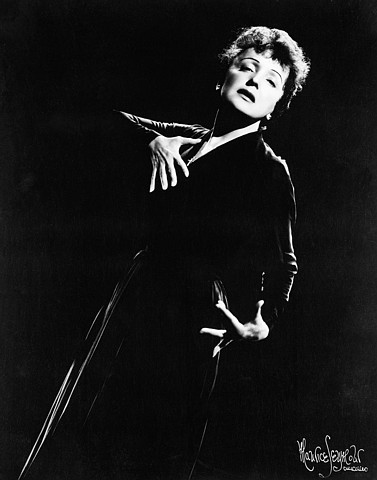
My Favourite Foreign-Language Track: Edith Piaf – Non, Je Ne Regrette Rien

Originally published on www.sosogay.co.uk

It’s not often that a foreign-language song becomes big in any music market other than in the one it was originally released. Occasionally we get song’s such as PSY’s ‘Gangnam Style’ or ‘Joe Le Taxi’ by Vanessa Paradis that manage to break into other markets and become commercially successful worldwide. Though these seem to come by once every so many years, one foreign-language song that became known worldwide and has also stood the test of time since its release over 50 years ago, is ‘Non, Je Ne Regrette Rien.’
The troubled yet endearing French singer Edith Piaf, whose other famous songs include the widely covered ‘La Vie en Rose’, sang the song. Piaf herself has received a little bit of a career revival over the last decade with the release of the film La Vie en Rose, a biopic about her life that won lead star Marion Cotillard the Academy Award for Best Actress.
However, despite the success of the film it’s the song that has become widely used in recent years. Many may be familiar with the song as it was the final one used in the film. Alternatively, you may have heard it on the advert for Specsavers, which was a strange choice to say the least. Some may also remember the cover of the English language version by Janey Cutler on Britain’s Got Talent.
The English language version translates to ‘No Regrets’ and has been covered by stars such as Shirley Bassey and Elaine Page, who also played Piaf in the stage show based on her life. But where as the English language version is good, it just doesn’t compare to the original by Piaf.
The song talks about having no regrets, and this being sung by a singer who struggled with morphine and alcohol addiction, endured several near-fatal car crashes, entered rehab multiple times to no avail and was seemingly unlucky in love most of her life, you can feel the passion and conviction in her voice as she sings, apparently about her own life, all the time letting the audience know they shouldn’t regret a single thing.
In a way, due to her fame and struggles, Edith Piaf is almost the French version of Judy Garland and this song is her version of ‘Over the Rainbow.’
Despite the translated versions being sung by great singers, which also means I can understand them better, when it comes to passion and conviction in a song it doesn’t matter whether you can understand the lyrics or not, you can hear it in the vocal performance and that is definitely true of ‘Non, Je Ne Regrette Rien’, which is why it is my favourite foreign language song.

28/12/2012

Review: Searching for Sugar Man

Originally posted on www.moviemuser.co.uk


Searching for Sugar Man takes the unsuspecting viewer on an amazing journey of how a career that almost never was makes a remarkable comeback.
The documentary tells the story of Rodriguez, who after a brief stint in the music industry 40 years ago disappeared after failing to set the charts alight. However the story was quite different in South Africa as this mysterious musician, who many describe as anti-establishment, helped inspire and motivate a generation and in turn helped to aid a revolution.
This amazing story is not what I expected, when I first heard about the documentary I expected it to be just a little detail about how he apparently failed in the music industry only to be brought back years later as a bit of commodity, I couldn’t have been anymore wrong if I’d tried. This documentary takes you on a journey through the life of Rodriguez’ music, from its humble beginnings in smoke filled bars to recording his first album only to be dropped by the label when it didn’t set the charts alight. Then it takes us to South Africa where the artist made a huge and lasting impression.
Finally, after a long hunt to discover this mysterious musician – who many had thought was dead – the documentary uncovers him and brings him back into the spotlight to do what he does best, and find out what he’d been doing in his nearly 30-year musical absence.
This film is really sweet and touching as we see someone filled with talent finally make it after being discarded and discover the success he knew nothing about. The film makes you think about just how many talented individuals are out there that have succumbed to the same fate.
It’s also an excellent observation of how shallow and harsh the music business can be (Clarence Avant comes across as a less than favourable individual), and also an insight into how bad censorship can be for individuals.
Helped along by excellent and artistic looking visuals and a superb soundtrack, which is the music of the films enigmatic hero, this is more than just a documentary; it’s a real life rags to riches story twice over.
A remarkable and unique documentary everyone should see.

09/12/2012

Review: Bjork - Bastards


Originally published on www.soundblab.com


The eccentric or, as some may put it, batshit crazy Icelandic singer Bjork returns to the music scene with the remix album of her seventh studio album Biophilia, the aptly-titled Bastards. Now credit where credit is due, anyone who names their album Bastards deserves a round of applause. Of course, Bjork has been doing that kind of thing for almost 30 years, first as part of the band The Sugarcubes and then solo.
She's done more than garner masses of applauses as well. After all, the unconventional singer has gained herself numerous Grammy Award nominations and has even been nominated for an Academy Award. However, I don't quite think that honour will be bestowed this album. I'm a big fan of Bjork's massive back-catalogue and I often find that some of her songs work extremely well as remixes. In fact, the remix of 'Army of Me' is probably better than the original version.
However, her eclectic mix of music and amazing vocals just aren't enough to save this remix record. Some tracks are OK, some are good, some are bad and some are a little hit-and-miss altogether and tend to just blend into the background, and Bjork is someone who should never blend into the background. The album does sound very worldly and mixes what sounds like Bollywood and African music into her rocky, electro sounds. While this is all well and good, many tracks sound too samey and just get lost while you're doing something else.
The best track on the album has to be 'Crystalline', which mixes Bjork's excellent vocals with an upbeat, haunting and Bollywood-inspired sound. It's not a combination you would initially put together but it works. The same thing works but not quite as well on the track 'Thunderbolt,' although there's just not enough of Bjork on it.
Other good tracks are 'Sacrifice' and 'Sacrifice Reprise' with their haunting vocals and almost minimal music, focusing on the voice, which is, as always, amazing. Both tracks are very atmospheric and melancholic, with the later making you feel as though Bjork herself has been engulfed in waves. Listen to it and you'll get what I mean. The worst track has to be 'Hollow', which is just seven long minutes of really boring music and boring vocals which don't grab your attention or make you feel anything other than bored. Basically, it's an awful track.
A special mention has to be given to 'Mutual Core', which has a number of excellent vocals. When it kicks in, it's extremely dark and heavy. However, only these parts are worth listening to - some are flat out yawn-inducing. It's a classic case of the hit-and-miss song.
Overall this album has some good mixes and some brilliant vocals. However, some parts completely miss the mark and leave you bored while only a few others pick you up. I think Bjork needs to go back to the drawing board and work on some new music, which is probably best for all of us.

25/10/2012

Giving Thanks: Alan Ball

Originally posted on www.biggaypictureshow.com


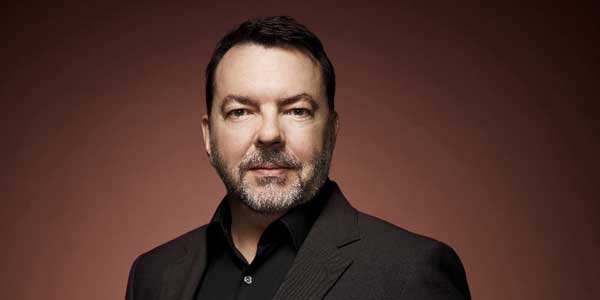
This week I’m heading across the pond back to America to give thanks to one of the gay heavyweights working behind the scenes in film and television, Oscar, Emmy and Golden Globe award winning film, theatre and television producer, writer and director, Alan Ball.
After finishing college in 1980, Ball began working as a playwright at the General Nonsense Theatre Company in Sarasota Florida. Although we may be skipping a few years ahead, by the 1990s he was working in television and contributed to a number of shows such as Oh Grow Up, Grace Under Fire and Cybill, which starred Cybill Shepherd.
In 1999 Ball’s first film as a screenwriter, American Beauty, exploded at the box office grossing over $350 million worldwide and won five Oscars at the 72nd Academy Awards, including Best Picture and a Best Screeplay gong for Ball. Although the film was a huge success, most of a hefty gay subplot was removed from the film until the very end, which is slightly disheartening, but luckily for the LGBT community it wasn’t entirely ripped from the film.
Venturing back into television, Ball created the hugely successful HBO drama series Six Feet Under, which was a rating’s smash and ran for five series. The show included a major gay character that broke the mould of the traditional stereotype, in the shape of David Fisher, played by Dexter’s Michael C. Hall. After the series ended his next huge hit came in the shape of vampire series True Blood.
Throughout the show a number of LGBT issues have been at the forefront, with the openly gay Layfayette, a lesbian relationship involving Tara, and at the end of the latest series a blossoming vampire lesbian relationship between Pam and Tara. We’ve even seen male vampires engaging in sex together, which despite them being dead all helps towards normalising LGBT characters on TV.
The whole show has been read as an allegory for LGBT rights, with vampires ‘coming out of the closet’ and fighting for equal rights. Although Ball has dispelled this comparison as laziness, the author of the books the show is based on has said this was the case when she wrote them. Either way it’s great to be able to see the fight for gay rights being represented in a way that isn’t overly forceful on an audience.
Along with all this Ball been named one of the most impressive gay men and women in Out magazine’s annual 100 list, and has been lauded as a strong voice for the community. As he left his position as show runner at the end of series five of True Blood, it will be interesting to see what Ball does next and whether he will continue to channel gay characters on his shows and challenge stereotypes that have existed for far too long.


05/10/2012

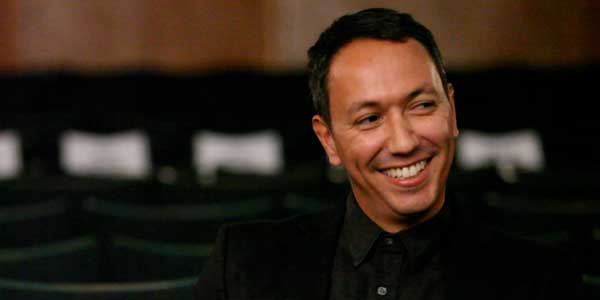
Interview: Director Oliver Hermanus

Originally published on www.biggaypictureshow.com


Beauty, or Skoonheid as it’s known in its native South Africa, takes a dark look at how mentally scarring sexual repression can be, and does so in an excellently compelling and disturbing way.

After winning the Queer Palm Award at the Cannes Film Festival in 2011 and being shortlisted as the South African entry for the Best Foreign Language Film at the 84th Academy Awards, Beauty will be released on DVD in the UK on October 8th.

We got to catch up with the writer and director of the film, Oliver Hermanus, to find out his thoughts of the film, his inspiration and what he will be getting up to next in the world of film.
What attracted you to this film?
The idea of beauty being a currency in the world and wanting to tell a story about its poisonous effects on a man who desires it more than anything.
What made you shoot the film in the way you did?
This film, dealing with a man who is a voyeur, was greatly influenced by certain Hitchcock films like Vertigo. We adopted the CinemaScope frame, 18mm lending and even use a zoom in the opening shot. I love old Hollywood and wanted this film to be the opposite of my first film, which was very hand held etc.
How did it differ from anything else you’ve done?
The scale is bigger, the slickness of the camera, the attention to detail in the production design and costume, instead of capturing a world, like I did on my first film [Shirley Adams], we created a world in Beauty. 

What do you hope this movie will achieve?
I hoped that it would give me the opportunity to make more films as I hope of every film I make. Reach a larger audience, gain value as a film director.
What has the reaction to the film been like?
Varied. This is a tough film and it sends people in different directions. The responses have been very particular depending on the countries it played in.
What did you think the reaction would be like to the film?
I had no idea, I had worked on it for so long by the end, writing, directing and editing it myself, that I couldn’t tell if it was funny or sad.
What were your feelings before the film debuted at the 2011 Cannes Film Festival?
We were still finishing it just before Cannes, so there was no time to sit around and think. It was a mad rush to get the sound done in time.
And how did it feel when the film was awarded the Queer Palm Award?
I think it is a good luck charm to win a prize, any prize, for your film at its premiere festival, so I was very happy to win the Queer Palm.
How did you feel when Beauty was entered as the South African entry for Best Foreign Language Film at the Academy Awards?
I was surprised; SA is very conservative, so I thought it was a sign of positive change in our local film bodies.
Do you think the story behind this film is important on a social level?
Definitely, this story is about many men especially in SA but also all over the world. I think many men and possibly women walked away from this film feeling challenged to make a change in their lives.
What was your favourite part about shooting the film?
I love working with actors, seeing the performance come to life, so definitely the shooting part.
What are your thoughts on the film itself?
I think it was a competent sophomore effort; it achieved the festival recognition I wanted, and gave me the currency to make something else after. So for me that means I like it, not that I have seen it over 1 year.
Finally what do you have lined up for the future?
I am preparing a Biblical period piece (who isn’t), which is currently in financing after a year of solid script work. It is titled The Well.

21/09/2012

Why Are There So Few Documentaries About The AIDS Crisis In Britain?

Originally posted on www.biggaypictureshow.com


The HIV/AIDS crisis is something that everyone from all different walks of life has heard of. From television, book and films to magazine articles, everyone has a pretty good understanding of what happened during the 1980s.
For gay people especially, the crisis itself is now deeply rooted into our consciousness, whether we were there during the 80s or not. We’ve heard about the people who died, those who fought for funding to try and find a cure and/or proper treatment, and everyone else in between who struggled long and hard to help people who have been diagnosed with the virus, as well as the families of the people who lost their lives due to it.
It’s even deeply rooted into our minds when it comes to sex, as we all now know the importance of safe sex and what it could mean if that one time we weren’t safe, we became unlucky.
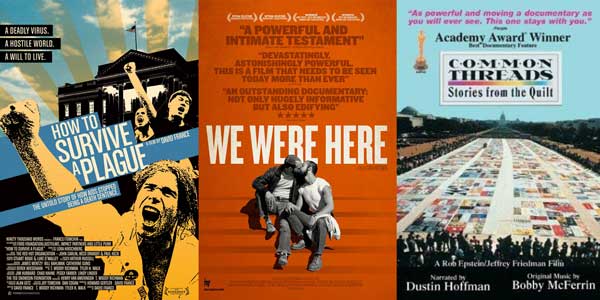
But for us Brits a lot of the information we get is from our American counterparts and about what happened over there during the 1980s. For example, in 2011 the documentary We Were Here looked at the AIDS crisis in San Francisco and interviewed a number of people who were there and experienced what happened.
By doing so it became the first documentary to take a deep look at what happened and the impact it had on the people living in San Francisco and how they responded to it. Today How To Survive A Plague opens in select US theatres, which looks at the crisis and the early days of the activist groups ACT UP (AIDS Coalition To Unleash Power) and TAG (Treatment Action Group). Those two looks at AIDS in America join the likes of the Oscar winning Common Threads: Stories From The Quilt.
However there has never been a decent-scale, feature documentary (that I know of, at least) that has taken a deep look at the crisis when it hit the UK. After all, HIV/AIDS has significantly impacted on a number of people over here and it has continued to do so since the 1980s.
We’ve all seen and heard about the safe sex advertising campaigns complete with icebergs, headstones and a deeply eerie narration from John Hurt, so we know it was just as bad over here. But do we know anything further than this campaign?
AIDS is still a problem now, with HIV infection rates remaining quite high and rising over recent years. It is definitely still an issue and we need to see and hear more about what actually happened to people living in the UK who were affected by HIV/AIDS during the early days of the disease, whether it was their friends, family or themselves that were affected by it, and whether it was slightly different or worse here than what people felt in other areas of the world. It is slightly ridiculous that for many British people, their knowledge of the AIDS crisis in the US is far greater than on what happened in the UK. Documentaries like these aren’t just about remembering our history, but also potent reminders of a disease that may not be the absolute killer it once was, but which we still need to be vigilant about.
Considering the success of the film We Were Here and the positive reaction it received, it would be interesting and helpful to see the effect a UK version had, told from a viewpoint that’s different from what we’ve already heard from over the pond.

18/10/2011

We remember: Milk

Originally posted on www.differentscene.co.uk


This week for Different Scene’s We Remember section I’m going to be looking at a film that was released just a few years ago but has already had a significant impact on the gay community, and that film is Milk.
The 2008 film was directed by Gus Van Sant and written by Dustin Lance Black and was quite a critical and commercial hit. It grossed $54 million at the box office and won two Academy Awards, including best actor for Sean Penn as Harvey Milk.
Released on the cusp of the Californian voter referendum on Proposition 8, that sought to ban gay marriage, the film couldn’t have come at a better time as Milk tells the story of Harvey Milk, the first openly gay man to be elected into public office in California, demonstrating how back in the 1970s people were willing to have a gay man in office. It begins on his 40th birthday and follows him as he settles in San Francisco and begins his journey into city politics were he waged various battles for gay rights and equality in the Castro neighbourhood and throughout San Francisco, it also looks at the political campaigns that sought to limit gay rights during the late 1970s that Milk also battled against.
As the film progresses it explores Milk’s romantic relationship with Scott Smith, which is truly touching in the movie and was played impeccably by both Sean Penn as Milk and James Franco as Smith. The film ultimately ends with the untimely tragic death of Harvey Milk who was murdered by Dan White.
The film itself is shot amazingly and the screenplay and acting is brilliant, as it flips through real life footage from the 1970s back to the present day film acting you can’t help but get engrossed. This film brought the name of a hugely influential, courageous and forward thinking man back into the mainstream, because lets face it Harvey Milk was remembered amongst a lot of people in the gay community, but there were people from a younger generation and people from the straight community who wouldn’t have known who he was, but this film brought him back to life, and for those who haven’t seen footage of the real Harvey Milk go and watch it because you will be stunned at how realistic the film is when compared.
This is why this film is in the We Remember section this week, because not only did it put gay characters back on the big screen and show that films with gay characters can and do perform well at the box office and at award shows, but it also allowed Harvey Milk’s name to live on once again, and show what great things he did for our community.

25/08/2011

More Film News ...

Originally posted on www.thefancarpet.com

Bale May Join Oldboy


It looks as though Christian Bale is on the look out for his next big film project and has Oldboy in mind.

With filming on the next Batman film, The Dark Knight Rises coming to an end, Variety has reported that one of Bale’s potential next film roles is the villain in Spike Lee’s remake of Oldboy.
Based on the Korean original, the film would see Bale playing a fiend who locks the film’s hero in a hotel room for 15 years. Which is a definite change from his role as the caped crusader.
This isn’t the only option for Bale, as he has apparently taken a shine to Clint Eastwood’s remake of A Star is Born and Michael Mann’s Gold, a treasure hunt thriller.
Bale is seriously in demand at the moment, which probably has something to do with his Academy Award win earlier this year, as he’s also been linked to Out Of The Furnace and Noah.
However Bales has another project to complete before considering these, as he is apparently appearing in Terrence Malick’s currently unnamed next project.


Wolverine Pushed Back


X-sequel The Wolverine has hit problems, resulting in filming being pushed back from autumn 2011 to some time in early 2012.

One theory behind the filming delay is that it will allow the film’s star Hugh Jackman to begin work on Les Miserables, however there is still the big question of where the filming will take place.
The original plan was to shoot most of the movie in Japan, but with the recent earthquake disaster many of the planned locations have had to be compromised.
A compromise was made with filming to commence in Vancouver in November, but Jackman’s commitments have made these plans highly unlikely.
With Fox reportedly planning on pulling out of Japan all together (which would prove difficult for filming as the majority of the film is set there), this looks like another hurdle for the film after the planned director Darren Aronofsky pulled out.
But with James Mangold now at the helm, and with the success of the original Wolverine film and the recent success of X-Men I doubt Fox will be closing this project anytime soon.

We Remember: Brokeback Mountain


Originally posted on www.differentscene.co.uk


In the latest instalment of We Remember we are taking a look at probably the most pinnacle moment in movie history when it comes to gay characters on screen, Brokeback Mountain.

Now I myself have a little bit of an issue when it comes to this film, fair enough it is a good film and the lead actors are brilliant in it and it was a huge moment for the gay community to see two very successful actors play gay for a big movie production. But my issue is that I don’t think it deserves the huge amount of praise it gets, yes it is good but I didn’t really think it was Oscar worthy?
Now there are probably a number of people who would like to sit me down now and tell me why this film was Oscar worthy and I would welcome them, but for the time being let’s just discuss the film.
For gay cinema goers this film was a definite stand out as the gay community finally had a huge blockbuster movie that centred around two closeted homosexual characters who were completely in love but because of the times they couldn’t be together, and that is extremely sad and this is heightened by the fact that this sort of thing would have happened to a huge amount of gay men back then, who would have got married, had children and repressed their homosexuality.
The best thing about this film has to be the fact that after a while you stop thinking about the fact that these two men are gay, and just watch it as an up to date love story for the 21st century, and this is probably why it did get the praise it got and the awards it received.
I mean who would have thought that twenty or thirty years previous to this, that there would be a film with two hugely respected and well known Hollywood actors playing gay characters in a huge film that centred around them? And who would have thought that it would have grossed over $100 million at the box office? Not many that’s for sure, but it was about time it did happen.
All in all this film is a land mark in gay cinema, and I think it may be a long time before another film like this comes along, and the acting from both Jake and the late great Heath Ledger was absolutely brilliant.
So it is a definite watch for anyone who is gay or just enjoys cinema with a gay twist. I think after writing this I must go back and watch it again and see if I still stand by the opinion that it didn’t deserve Oscar glory.

17/08/2011

Icons: Judy Garland

Originally posted on www.differentscene.co.uk


As a new feature for Different Scene we will be profiling icons in the gay world. These people are often cited as being huge gay icons for numerous different reasons, whether it be because of their political stance, the way they’ve helped change the gay landscape or just because they have been adopted by the gay community for another reason, either way they are all extremely well known to members of the gay community.

For our first feature we look at a woman who is regularly cited as the greatest gay icon of all time, Judy Garland. Through her pain and suffering and ups and downs in both her personal and professional life, Judy is a huge star of times past and still in many people’s opinions, the greatest gay icon of all time.
Starting her life off as Francis Ethel Gumm, Judy started performing at the tender age of two and would do so for the remainder of her life. After years of performing on the stage with her sisters she was soon snapped up by MGM where she joined their roster of young talent. While here she forged a name for herself whilst staring alongside Mickey Rooney in a hand full of films, but it was a little film she made in 1939 that would cement her fame and ensure that she would forever be remembered.
That little film was The Wizard of Oz, a film that everyone around the world knows, and it was this film that provided Judy with her signature song for which she will always be remembered, Over the Rainbow.
It was this film that many consider to be the reason why Garland has become synonymous with the gay community. Her escape over the rainbow from the drab darkness of reality to a place full of colour and different people who didn’t fit society’s norms reflected the feeling of the gay community at the time, who were being repressed as homosexuality was still illegal, and for many years gay men were known as friends of Dorothy.
The film has become a lasting success and even won Judy a Juvenile Academy Award. But it was after this that things started to go bad for the young Garland.
After years of being over worked by the studios things started to take their toll on her, and she was dropped from the studio in 1946 following accounts of bad behaviour on film sets, drug use, suicide attempts and her fluctuating weight. These problems would go on to plague the former child star for the remainder of her days.
However through the pain and suffering Garland continued to bounce back, with sell out concert performances around the world and an Academy Award nomination and a Golden Globe win for her role in A Star Is Born. It was in the early 1960s when Garland truly bounced back with her performance at Carnegie sHall that is often cited by many to be the greatest night in show business history. The live recording of her performance spent week at the top of Billboard album charts and won Garland numerous Grammy awards, the album has not been out of print since.
Things looked good for her but through the success her failed marriages and other personal problems, which still included suicide attempts and drug and alcohol abuse continued to plague her, and after the cancellation of her television show, many regarded this to have been the final devastating blow to her.
Then in 1969 after years of torment and anguish Garland was found dead in her bathroom at her rented Chelsea home in London, where she had died of an overdose.
Like the 1960s version of Amy Winehouse, Garland was a true talent whose star burnt bright but burnt out ever so quickly.
Looking back on it now you can see why Judy has become such a prolific gay icon, her suffering and torment as a woman in a mans world emulated the suffering that gay men at the time were experiencing for not fitting the norm, and it has often been widely rumoured that Garland’s death was one of the triggers to the Stonewall riots back in 1969, but that is still just a myth.