Showing posts with label Lesbian. Show all posts

22/03/2013

Have Gay People Vilified The Church?

Originally published on www.vadamagazine.com


For as long as anyone can remember people have been in a constant battle with each other for one reason or another. Different countries have waged wars against each other, we’ve seen celebrities involve themselves in public slagging matches, and there’s usually one mega corporation suing another over a patent or something similar. Minority groups have also found themselves warring with multiple institutions such as the government, but one battle that has gone on for as long as anyone can remember is the battle between the Church and the gay community.
There are a multitude of reasons behind this on-going battle, with many people of religion finding homosexuality a sin or life choice, and fighting endlessly in the battle to prevent gay marriage around the world.  Some members of the religious institution have compared homosexuality to heinous acts like paedophilia and bestiality.
Just last week the new Pope, Cardinal Jorge Mario Bergoglio or Pope Francis, commented on same-sex marriage and gay adoption saying it was a “destructive attack on God’s plan.”
But one thing we don’t appear to have considered in this endless tirade of name-calling and accusations is, have gay people completely denounced the Church and brandished them as an eternal villain?
With comments such as this by the leader of the Catholic faith it is easy to say that the hatred expressed towards the Church by many gay men and women is deserved, but not everyone who has a faith or follows religion should be tarred with the same brush.
We have seen several news articles and feature pieces over the last decade that have discussed topics such as gay vicars or priests and how many gay people, just like the heterosexual community, believe in religion. There’s even a group called Christians for Equal Marriage that support the right for gay people to marry just like their straight counterparts.
Just last week the American LGBT religious organisation, Faith in America, spoke out about how the Church must stop harming LGBT people. The groups spokesman, Brent Childers, who was aligned with the anti-gay religious industry said in a statement: “It is critical for all to understand the devastating effects to a young person when their church leadership teaches that homosexuality is a sin and that they are not God’s best.”
“I have come to learn the unintended consequences of those that believe they are teaching what it is to be a good Catholic or Christian. In fact they are the very reason why LGBT teens suffer an unusually high rate of depression, attempted suicides, and worse, suicide.”
Various churches from around the globe have also addressed the issue of gay rights with a particular focus on gay marriage. Many have fought for the cause of the LGBT community, and have shown that not everyone is using God’s name to discriminate. Only last week a Church in North Carolina stated that they would not conduct weddings for anyone until they were able to hold same-sex weddings as well, and a chapel within the Palace of Westminster may be changed so that it can perform equal marriage ceremonies.
Also, in what would appear to be a slight turn in events, a poll conducted by an anti-LGBT rights Christian campaign group found that the majority of American’s believed that, “homosexuality is a civil rights issue like gender, race and age”.
Although there is a clear signifier that many people with a religion, and many within religious institutions around the world, believe in the right for gay people to marry and gay rights in general, there are still a number of people out there using God’s name to justify an anti-gay rhetoric.
We have all seen or heard the rants from the most famous anti-gay group, the Westboro Baptist Church, whose “God Hates Fags” slogan has become a symbol for just how unaccepting many people with faith or religion can be. There’s no doubt that their presence within the media has turned many gay men and women away from the Church as they view it as an ever present evil.
This week alone Washington Times columnist Jeffery Kuhner, accused President Obama of waging a war on the Church with his support of gay rights, he wrote: “Pope Francis is the opposite of a modern American liberal. In fact, he probably finds much of the Democrats’ agenda repulsive. President Obama is waging a war on Christians and on Catholics in particular.
Mr. Obama supports homosexual ‘marriage.’ He has allowed homosexuals to openly serve in the military. His pro-homosexual, pro-abortion and pro-contraception policies violate basic Catholic doctrine. He is an enemy of the church.”
Despite the progression of LGBT people in wider society, it does appear that the combat with the Church will continue for some time, with a number of people within the Church and many who use the word of God to support their own views actively trying to prevent LGBT legislation in a number of areas. However this not only harms LGBT people with faith, who may become conflicted in what they believe, risking psychological harm through this conflict, but also to the Church as it further becomes an outdated institution. However, the LGBT community must remember that not everyone in the Church, or with faith is out to get them, and remember that most people with faith believe that everyone should be treated equally.
That being said, the tense and conflicting battle of rhetoric between religious communities and the LGBT community is clearly far from over.

10/10/2012

Are Gay Men Considered More Acceptable On Screen Than Lesbians?

Originally posted on www.biggaypictureshow.com


Gay people have entered the mainstream media significantly in recent times, whether as television or radio presenters or characters in television and film. But something that has to be looked at, is how this representation is mainly of gay men.
When we see gay couples or a singular gay person in a film or on television, it is almost always gay men and very rarely a lesbian or lesbian couple. But why is this? Is the media and society in general more accepting of gay men that it is of gay women?
In recent times gay men have been shown in a particular light – we all know the stereotype of the fashion conscious, confident, out going, opinionated gay man who regularly springs up in TV programmes and films. When partnered with a straight woman, this coupling looks like a sure fire hit – just look at Carrie and Stanford in Sex and the City.
This cool trendy image of the gay man has also seeped into public consciousness as well, because as a gay man, how often have you bumped into someone on a night out or just with friends and heard the phrase, “I’ve always wanted a gay friend.” However you never hear someone say the same about having a lesbian friend, maybe because some people still have the image that lesbians are Dr Martins wearing, radical feminists in dungarees and checked shirts. It’s a stereotype that I can’t say I’ve actually come across in real life, and there aren’t many, if any, straight man and gay woman or straight woman and gay woman pairings in our regularly viewed entertainment.
But why is this? Is it because of the image that has been broadcast everywhere of gay men and the use of celebrities such as Graham Norton, Alan Carr and Gok Wan that have made gay men much more accessible and fashionable than women? We do have lesbian television presenters such as Sue Perkins, but let’s be honest, her time on television can’t really be compared to the constant presence of her gay male counterparts.
When it comes to gay men on television and film, there isn’t as much representation as there could be, especially in film, where lead gay characters are few and far between, but there are still significantly more gay men than there are lesbians.
Programmes such as Queer as Folk and Will & Grace helped bring gay men into the mainstream media and they have become staples ever since, but if Will was straight and Grace was a lesbian, would the programme have been as big as it was? The answer is probably no, because the stereotype conveyed in society of a gay man seems to add more comic value than that of a lesbian.
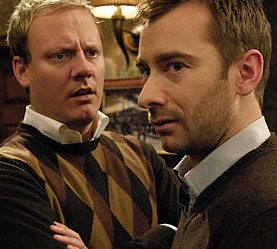
This continues throughout television where gay couples on British TV in Eastenders and Coronation Street have been major successes and have been given many major storylines (there have been lesbian storylines, but beyond the girl-on-girl kiss in Brookside, haven’t seeped into cultural consciousness in the same way). In film, Brokeback Mountain was a major Hollywood success both financially and personally for gay men, as they hadn’t had that type of exposure in a Hollywood movie ever, but there hasn’t been a major mainstream film based around lesbians.
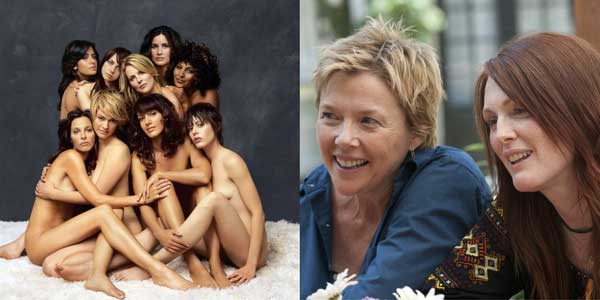
Ok, there was The Kids are Alright in terms of movie representation, and there have been hit shows in the form of The L Word and Lip Service, but the majority of viewers for these programmes seem to be lesbians or people who already back the LGBT community, whereas programmes like Queer as Folk became a surprise hit with a large number of diverse viewers. The character of Sophie Webster has also played one of the bigger characters in Coronation Street recently, and being a lesbian the character is one of the most high profile in terms of lesbian representation, but why did it take them so long to introduce a lesbian character when they’d already had a few major gay themed storylines at that point?
We may never know the real answer, but hopefully the representation and acceptance of gay females on television and in film will improve, in the same way that it did for gay men. Sue Perkins is currently writing a new sitcom for BBC2 concentrating on a lesbian vet. How well it will do is another matter. But with representation increasing, hopefully we will see gay women and men on our television screens in a bigger quantity and more regularly. Who knows, the next big gay film in Hollywood may just centre around a lesbian. Here’s hoping.

16/05/2012

Review - She Monkeys

Originally published on www.biggaypictureshow.com

She Monkeys is an intriguing, dark and eerie tale of two girls engaged in a confusing underlying lesbian relationship set against the backdrop of the equestrian vaulting world. With a relationship that’s brimming with physical and psychological challenges, lead character Emma (Mathilda Paradeiser) does whatever it take to master the rules of this almost twisted game, failing to resist the temptation of taking control from Cassandra (Linda Molin).
The film was shot and is based in Sweden, but is subtitled in English for all of you out there who enjoy a good foreign language film, and this film is pretty special. You can see why it won a host of awards on the festival circuit over the last 12 months, even taking the Best Narrative Feature trophy at the Tribeca Film Festival as it grips you from beginning to end even if Swedish isn’t your mother tongue.
Overall the film put me in mind of a cross between the Hollywood film Black Swan and the more independent My Own Private Idaho, for a number of different reasons. The film has some of the same themes that were included in Black Swan, with the underlying lesbian relationship and the competitiveness of the two lead characters that ultimately makes them both appear a little psychotic, while the way it’s shot and set against the eerie music brings in a sense of Gus Van Sant’s Idaho.
Imagery in the film overall was brilliant as it helps maintain the film’s realism and gives it its overall feel of eeriness, which fits in perfectly with the script.
Despite the similarities to Black Swan’s competitive lesbian undertones, the film has another strong theme running through it – lost youth. This can be seen in the plot surrounding Emma and Cassandra, as Emma appears to want to remain young and not deal with the pressures of adulthood, such as sexuality and the torment of love and relationships. It can also be seen within the subplot of Emma’s younger sister Sara, whose longing for her much older cousin and the desire to wear a bikini gives us an insight into how children today are growing up too fast in an overly sexualised society.
The acting in the film is great all round, but the person who steals the show is definitely Isabella Lindqvist as Sara, whose powerful portrayal of a lost, confused and troubled little girl attempting to deal with the pressures of being a child but wanting to be an adult outshines everyone else. It makes you feel a lot of empathy towards the character and children experiencing such issues around the world.
Overall Verdict: This film is a highly enjoyable feature debut and I would highly recommend it to anyone looking for something a little different, as it tackles themes that Hollywood just isn’t brave enough to explore.

13/07/2011

Opinion: Gay TV Takeover?


Originally posted on ww.lgf.org.uk


Last week Brian Sewell hit the headlines after his attack on Coronation Street for its apparent unrealistic portrayal of homosexual characters within the soap, believing that there were too many. 

In his article Sewell wrote, “Is it true that the lives of heterosexual Mancunians are haplessly intertwined with transvestites, transsexuals, teenage lesbians and a horde of homosexuals across the age range? Is Manchester now the Sodom of the North?”

Well the answer to this is yes, and it’s not just up North where the lives of people from the LGB&T community have mixed with people of the heterosexual community, it’s happening all over Britain, as believe it or not in the 21st century people are out and proud and it is ok to be gay.

Sewell Mentioned in his column that there were far too many people from the LGB&T community in Coronation Street considering that only 6 percent of the population are gay.

How does he know this? How does anybody know this? That 6 percent is an estimation of how many gay people there are in the UK, as there is no official way of finding out the sexual orientation of many people, and with news items like this still being written in 2011 we may never know.

Think about it, in today’s day and age how much do we really know about the people living on our streets? 

If you’re like me, and most people in the UK today, then the answer is not a lot, so no one knows how many homosexuals are in fact living in one area, the only reason we know this on soaps is because we are given a window into the characters lives.

What is even more infuriating is the notion that having a few gay characters living in Coronation Street is deemed far-fetched or unbelievable, yet the thought of having serial killers pop up every few years is deemed perfectly fine. Tell me how many serial killers have lived on your street over the last 10 years? I can assure you it wont be as many as Coronation Street or any other soap has had. Well lets hope not anyway.

Eastenders has also come under criticism recently and wasn’t spared when it came to this article last week. The show caused outrage for showing two men in bed together, who were apparently naked (the horror), with people saying it should be shown after the watershed, but why? This is just a normal portrayal of a gay relationship. I can assure you I have seen heterosexual couples in bed together that are seemingly naked on several occasions over the years and not once have I heard uproar over that.

Apparently these people who are complaining are just thinking of the children, but how can they be thinking about the children when they want a true portrayal of a gay relationship banned until after the watershed? Surely they are just enforcing homophobic prejudices upon their children and telling them that if they are gay and lie in bed naked together with someone of the same sex then it’s a sin, where as being naked in bed with someone of the opposite sex is fine.

The recent teenage lesbian storyline shown on Coronation Street has had a significant impact on young people across the UK who are struggling with coming to terms with their sexuality, and it has shown them that being gay is nothing to be ashamed of, and we haven’t seen a sudden rise in teenage lesbians because of it have we? No, so what’s the problem?

According to Sewell there’s a new book called Primetime Propaganda by Benjamin Shapio, which argues that an exclusively liberal TV establishment shapes taste, style, politics and family life and attitudes, and complains that gay writers, directors and actors admit to promoting their own gay rights agendas.

Fair enough, maybe the writers and directors are using elements of Coronation Street to show gay characters and by doing this they are helping to portray members of the LGB&T community in a positive light, but to suggest propaganda just makes it sound as though some people haven’t progressed very much in the last 50 years.

On a final note, surely by attacking the soap and saying there are too many gay characters and suggesting that certain scenes should be shown after the watershed, isn’t the whole article that started this debate working as a piece of homophobic propaganda?