Originally posted on www.biggaypictureshow.com
Gay people have entered the mainstream media significantly in recent times, whether as television or radio presenters or characters in television and film. But something that has to be looked at, is how this representation is mainly of gay men.
When we see gay couples or a singular gay person in a film or on television, it is almost always gay men and very rarely a lesbian or lesbian couple. But why is this? Is the media and society in general more accepting of gay men that it is of gay women?
In recent times gay men have been shown in a particular light – we all know the stereotype of the fashion conscious, confident, out going, opinionated gay man who regularly springs up in TV programmes and films. When partnered with a straight woman, this coupling looks like a sure fire hit – just look at Carrie and Stanford in Sex and the City.
This cool trendy image of the gay man has also seeped into public consciousness as well, because as a gay man, how often have you bumped into someone on a night out or just with friends and heard the phrase, “I’ve always wanted a gay friend.” However you never hear someone say the same about having a lesbian friend, maybe because some people still have the image that lesbians are Dr Martins wearing, radical feminists in dungarees and checked shirts. It’s a stereotype that I can’t say I’ve actually come across in real life, and there aren’t many, if any, straight man and gay woman or straight woman and gay woman pairings in our regularly viewed entertainment.
But why is this? Is it because of the image that has been broadcast everywhere of gay men and the use of celebrities such as Graham Norton, Alan Carr and Gok Wan that have made gay men much more accessible and fashionable than women? We do have lesbian television presenters such as Sue Perkins, but let’s be honest, her time on television can’t really be compared to the constant presence of her gay male counterparts.
When it comes to gay men on television and film, there isn’t as much representation as there could be, especially in film, where lead gay characters are few and far between, but there are still significantly more gay men than there are lesbians.
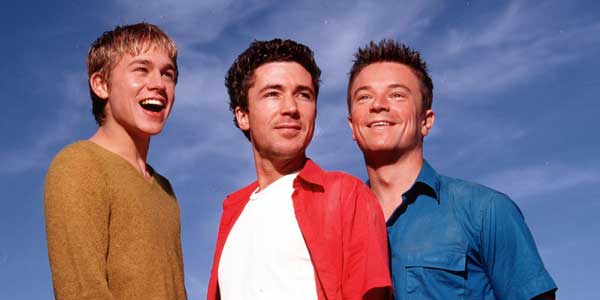
Programmes such as Queer as Folk and Will & Grace helped bring gay men into the mainstream media and they have become staples ever since, but if Will was straight and Grace was a lesbian, would the programme have been as big as it was? The answer is probably no, because the stereotype conveyed in society of a gay man seems to add more comic value than that of a lesbian.
This continues throughout television where gay couples on British TV in Eastenders and Coronation Street have been major successes and have been given many major storylines (there have been lesbian storylines, but beyond the girl-on-girl kiss in Brookside, haven’t seeped into cultural consciousness in the same way). In film, Brokeback Mountain was a major Hollywood success both financially and personally for gay men, as they hadn’t had that type of exposure in a Hollywood movie ever, but there hasn’t been a major mainstream film based around lesbians.
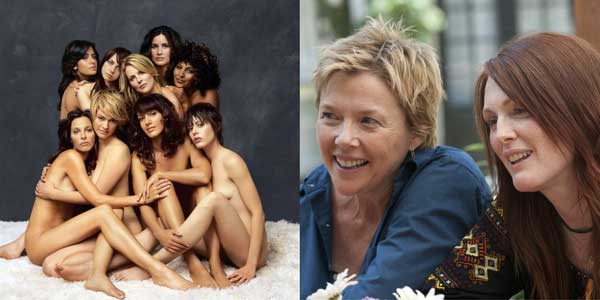
Ok, there was The Kids are Alright in terms of movie representation, and there have been hit shows in the form of The L Word and Lip Service, but the majority of viewers for these programmes seem to be lesbians or people who already back the LGBT community, whereas programmes like Queer as Folk became a surprise hit with a large number of diverse viewers. The character of Sophie Webster has also played one of the bigger characters in Coronation Street recently, and being a lesbian the character is one of the most high profile in terms of lesbian representation, but why did it take them so long to introduce a lesbian character when they’d already had a few major gay themed storylines at that point?
We may never know the real answer, but hopefully the representation and acceptance of gay females on television and in film will improve, in the same way that it did for gay men. Sue Perkins is currently writing a new sitcom for BBC2 concentrating on a lesbian vet. How well it will do is another matter. But with representation increasing, hopefully we will see gay women and men on our television screens in a bigger quantity and more regularly. Who knows, the next big gay film in Hollywood may just centre around a lesbian. Here’s hoping.