Showing posts with label Russell T Davies. Show all posts

10/10/2012

Giving Thanks: Angela Robinson

Originally posted on www.biggaypictureshow.com
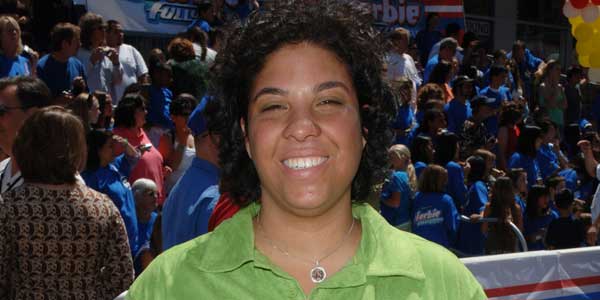

Last week, I gave thanks to one of the most prolific LGBT writers in the UK, Russell T. Davies, and this week I’m not only looking across the pond at our American counterparts, but I’m also looking at the lovely lady gays. First on this list to give thanks to is film and television director, screenwriter and producer Angela Robinson.
Many of you out there may not have heard of Miss Robinson, but I can be pretty certain that you’ve heard of her work.
In the UK and America, Queer as Folk helped gay men burst into the mainstream and also made them the central characters of their own TV show, but for lesbians this didn’t really happen until the hit show The L Word came on the scene in 2004. In the midst of all the cast and creators, Angela Robinson was there working away acting as a director, writer and producer for the show, which helped lesbian characters break out onto American television like they never had before.
Aside from this, the show gave gay women a show of their own, instead of having to tune into Queer as Folk USA, where there were lesbian characters but they didn’t really balance out against their gay male counterparts.
This isn’t the only thing that she has done, she was also the director, writer and editor of the film D.E.B.S, an action comedy that was a slight parody of Charlie’s Angels and revolved around a lesbian love story. The film was an expansion on a short film of the same name, which was created by Robinson and won a clutch of awards back in 2003.
Luckily for everyone, Angela has continued to work in television and film through the last decade and has directed films such as Herbie: Fully Loaded, starring Lindsay Lohan. She has also worked as a writer on programmes such as True Blood, which itself can be viewed as an allegory for gay rights and has recently seen a few lesbian twists coming into it (whether she had anything to do with this is anyone’s guess).
As we can see, gay people working behind the scenes are helping us gain mainstream recognition in TV and film across the globe in an array of different shows. I mean, how many of you thought you’d see lesbians in a vampire programme (who aren’t just there for the titillation of straight male viewers)? But luckily for us these gay filmmakers, writers and producer are here, and hopefully here to stay.


02/10/2012

Giving Thanks: Russell T. Davis

Originally posted on www.biggaypictureshow.com


When we see gay people appear on our television screens many of us may feel a sense of pride or achievement just because we are being represented on television. In all fairness this sense of pride or achievement may not be as strong as it was 10 or 15 years ago, as we now see gay people in all walks of life and we are no longer considered a taboo in the British media, or by a vast number of those in society.
But what we have to ask ourselves is how did this happen? Yes there have been people campaigning for years to allow gay people to have the same rights as straight people, and they fought the battles in courts and in parliament and helped us achieve equality in the workplace, schools and many other areas of our lives where we were once discriminated.
But the mass media, television, film, music also had a significant impact as many believe what they see on TV, and come to find what they are shown to be the norm. So how did we get to have gay characters spring up in film and television? Well that credit has to be given to those behind the scenes.
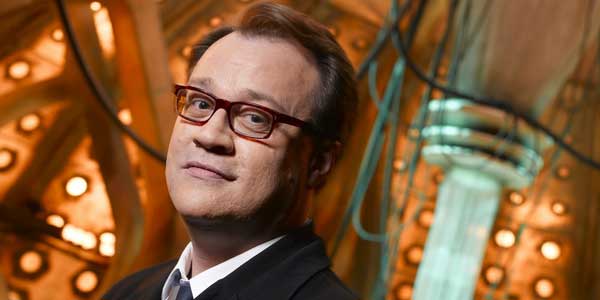
Over the last few decades countless writers and producers have helped gay men and women make their way onto our screens, and in Britain one of the most well known to do this is Russell .T Davies.
We all know Russell for his revival of the hit Sci-Fi programme Doctor Who and its subsequent spin off shows Torchwood and The Sarah Jane Adventures, and even with these shows he’s managed to incorporate LGBT characters in the shape of Captain Jack Harkness the well known bisexual who is played by openly gay actor John Barrowman.
But obviously this probably wouldn’t have been possible if it hadn’t been for his breakout television show Queer as Folk, which centred on gay men living in Manchester. The show broke boundaries and helped gay men get the representation on television that was needed.
However his contributions to the LGBT community on television didn’t just start on Queer as Folk. Whilst working on children’s television show Children’s Ward he wrote a script that challenged the assumption that only gay people could contract HIV, when he featured a teenage boy who had been infected with the virus due to a blood transfusion. And he even incorporated gay characters in other programmes he worked on, such as a lesbian vicar in the late night soap Revelations.
So whilst we are sat watching television and see these gay characters walking around on our television sets, just take a moment to think about the great people working behind the scenes who have helped push us into the mainstream media and into most people’s viewing schedules.


29/08/2012

Would Queer as Folk Have Been Made Today?


Originally published on www.biggaypictureshow.com

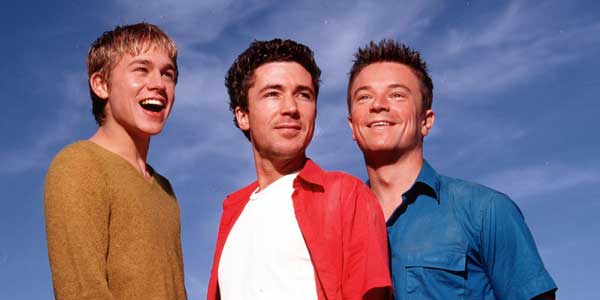
In 1999 a Channel 4 series not only changed the landscape for homosexuality on television but television in general. Queer as Folk introduced viewing audiences to the lives of a group of gay men living in Manchester that regularly frequented the infamous Canal Street.
But after making such an impact on audiences the world over, and after all the series was re-made for an American audience (which ran for five seasons), it makes you wonder whether this type of programme would get commissioned now.
It’s been more than 10 years since we last saw Stuart, Vince, and Nathan and all the other characters popping up on our screens, but the impact they left is phenomenal. Before the show gay men had representation on television – after all Dale Winton and Julian Clary were extremely popular – but this was the first time a group of gay characters were central to an entire series, and not just a few extra characters added on at the end.
Since the show left the airwaves it paved the way for multiple gay characters and storylines in a whole variety of different shows. It isn’t unusual these days to turn on any soap opera and see several gay characters, something that wasn’t really seen before the turn of the new millennium, which was just after Queer as Folk. Gay men and women now had a significant part in soaps, dramas and comedy shows, allowing the public to see that gay people are everywhere and that we’re just normal people.
However, whereas we do get multiple gay characters frequenting the Rovers Return or the Queen Vic, gay specific shows seem to be very few and far between. There was Sugar Rush on Channel 4 that came around in 2004, and now we have Lip Service, which was first introduced in 2010, but that means that in the 11 years between Queer as Folk and Lip Service there was only one other UK television show that focused primarily on gay characters.
Maybe it’s because there just aren’t people out there writing these kinds of programmes now or maybe they feel that after Queer as Folk there wasn’t much more to be done – I mean who would want to take on the amazing Russell T Davies? But it could also have something to do with attitudes. In the last few years there have been multiple complaints made to Ofcom regarding gay people on screen in shows such as Coronation Street, Eastenders and Torchwood, but why is this? Surely attitudes have become more diverse in the last 10 years since Queer as Folk came out, or maybe due to the lack of gay central shows people are forgetting about the impact that was made a decade ago, or maybe it’s as simple as people were a little bit more open and curious back in the 90s.
It does appear that given the length of time between these gay central shows and the complaints received about soap operas, that if Queer as Folk were to be pitched today and not 10 years ago, then it wouldn’t have been made. Then again if it had never been made in the first place I doubt there would be many gay people in soaps today.
It’s not all doom and gloom though, just recently it was announced that comedian Sue Perkins will be staring in a comedy series for BBC2 called Heading Out, which will see Perkins play a vet who is afraid to come out to her parents.
So maybe we are about to turn a corner and see more LGBT focused programmes again where gay people play the leads, but whether something like Queer As Folk will come along again is a different matter all together.


03/07/2011

We Remember: Queer as Folk UK

Originally posted on www.differentscene.co.uk

Now the last time we did one of these we looked at Queer as Folk USA, this time we’re going to look at the original British version of the show.
The programme courted controversy from the get go because of its unashamed portrayal of its openly homosexual characters and although the show only ran for 10 episodes between 1999 and 2000, the impact they had on openly gay representations in the media was enormous to say the least.
Queer as Folk achieved excellent ratings, produced a highly successful soundtrack, inspired the American remake (helping break boundaries across the pond) and was used to celebrate Channel 4s 25th birthday celebrations.
I like many other young fans of the show learnt about the show through its impact it had on British television and at the age of 15 bought the deluxe edition box set, and have been in love the show ever since.
From the underlying love between Vince and Stuart, the naivety and coming of age story that surrounded Nathan to the explicit sex scene and endless amounts of humour, shock, love and compassion that the show emits, it is truly one of the best television shows ever made, and is a significant piece in homosexual representation.
This programme is the essential must watch for anyone looking for a great piece of gay television. Plus it also contains Charlie Hunnam circa 1999, what more could you ask for?