Showing posts with label Sugar Rush. Show all posts

13/09/2012

Why gay characters need to be on TV

Originally posted on www.biggaypictureshow.com


Over the last decade the gay community have come onto our television screens with a bang. Since the 90s we have seen a selection of television shows achieve ratings and critical success such as Queer as Folk, Sugar Rush and Lip Service, along with gay characters playing principal roles in other television dramas and comedies like Shameless, Skins and Gimme Gimme Gimme.

Aside from this we now have gay characters on our television screens on a daily basis with soaps like Coronation Street, Hollyoaks and Eastenders featuring several gay characters and storylines, allowing everyone to see that we are just the same as everyone else.

However where these programmes, characters and storylines have been met with praise and positive responses, they have been equally met with dislike and several complaints to Ofcom.

Over the last few years there have been several issues in the news surrounding gay people on television, such as the complaints surrounding a lesbian kiss on Coronation Street, along with some feeling there were two many gay characters on the show. There were complaints surrounding a gay sex scene involving openly gay actor John Barrowman in Doctor Who spin off Torchwood, despite the programme being aired after the watershed, and there were complaints regarding a gay couple being seen in bed with each other in Eastenders.

The fact of the matter is when straight people on these shows are shown kissing or in bed, we never hear of several complaints being made to Ofcom because of it. And even more importantly gay people are part of society and therefore should feature in television shows especially soap operas, I mean we wouldn’t complain if there were two many black or Asian people on Coronation Street would we?

Aside from gay people needing to be seen on television to show people that we are part of society, it also needs to show that we are just like everyone else, dealing with the mundane 9 – 5 working hours or having troubled relationship problems. Yes there have been stereotypes in the past such as Tom from Gimme Gimme Gimme or Mr Humphries in Are You Being Served? But in the last 10 years television has helped show that the gay community is just as diverse as every other community and that we aren’t all running around shouting “I’m free.”

The most important reason for us being visible on screen is to show today’s youth that it’s ok to be gay so they aren’t scared to come out, and to show others that gay people aren’t to be viewed as something different or to be scared of. Eventually with enough positive portrayal on television we may be able to almost stamp out homophobic issues, but until then we’re just going to have to keep showing everyone that we are just normal people.

29/08/2012

Would Queer as Folk Have Been Made Today?


Originally published on www.biggaypictureshow.com

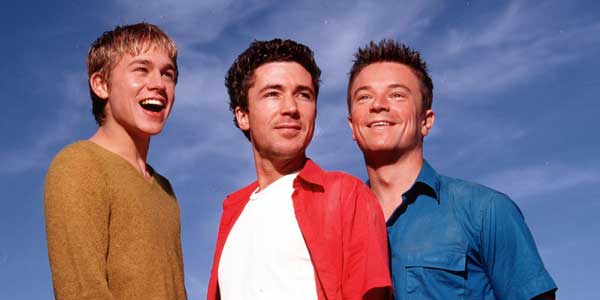
In 1999 a Channel 4 series not only changed the landscape for homosexuality on television but television in general. Queer as Folk introduced viewing audiences to the lives of a group of gay men living in Manchester that regularly frequented the infamous Canal Street.
But after making such an impact on audiences the world over, and after all the series was re-made for an American audience (which ran for five seasons), it makes you wonder whether this type of programme would get commissioned now.
It’s been more than 10 years since we last saw Stuart, Vince, and Nathan and all the other characters popping up on our screens, but the impact they left is phenomenal. Before the show gay men had representation on television – after all Dale Winton and Julian Clary were extremely popular – but this was the first time a group of gay characters were central to an entire series, and not just a few extra characters added on at the end.
Since the show left the airwaves it paved the way for multiple gay characters and storylines in a whole variety of different shows. It isn’t unusual these days to turn on any soap opera and see several gay characters, something that wasn’t really seen before the turn of the new millennium, which was just after Queer as Folk. Gay men and women now had a significant part in soaps, dramas and comedy shows, allowing the public to see that gay people are everywhere and that we’re just normal people.
However, whereas we do get multiple gay characters frequenting the Rovers Return or the Queen Vic, gay specific shows seem to be very few and far between. There was Sugar Rush on Channel 4 that came around in 2004, and now we have Lip Service, which was first introduced in 2010, but that means that in the 11 years between Queer as Folk and Lip Service there was only one other UK television show that focused primarily on gay characters.
Maybe it’s because there just aren’t people out there writing these kinds of programmes now or maybe they feel that after Queer as Folk there wasn’t much more to be done – I mean who would want to take on the amazing Russell T Davies? But it could also have something to do with attitudes. In the last few years there have been multiple complaints made to Ofcom regarding gay people on screen in shows such as Coronation Street, Eastenders and Torchwood, but why is this? Surely attitudes have become more diverse in the last 10 years since Queer as Folk came out, or maybe due to the lack of gay central shows people are forgetting about the impact that was made a decade ago, or maybe it’s as simple as people were a little bit more open and curious back in the 90s.
It does appear that given the length of time between these gay central shows and the complaints received about soap operas, that if Queer as Folk were to be pitched today and not 10 years ago, then it wouldn’t have been made. Then again if it had never been made in the first place I doubt there would be many gay people in soaps today.
It’s not all doom and gloom though, just recently it was announced that comedian Sue Perkins will be staring in a comedy series for BBC2 called Heading Out, which will see Perkins play a vet who is afraid to come out to her parents.
So maybe we are about to turn a corner and see more LGBT focused programmes again where gay people play the leads, but whether something like Queer As Folk will come along again is a different matter all together.


13/07/2011

We Remember: Beautiful Thing

Originally published on www.differentscene.co.uk


Re-wind back to 1996 and the laws were completely different for gay people in the United Kingdom, Section 28 still existed which prevented the ‘promotion’ or ‘teaching’ of homosexuality, meaning the discussion of gay relationships in schools weren’t allowed, and the legal age for gay sex was eighteen year old, two years older than that of straight people.
But amongst all this one film emerged in 1996, Beautiful Thing.
The film, which initially started life as a play back in 1993 focused on the developing relationship between two teenage boys living on a working class estate in South East London, as they both come to terms with the fact that they are gay.
The film truly is magical as it focuses on Jamie and Ste, as they gradually realise that they are both gay and ultimately from what you can see as a viewer, fall in love. The film doesn’t concentrate on copious amounts sex, clubbing or drug taking which would later emerge in hard hitting controversial programmes such as Queer as Folk and Sugar Rush, but is instead a truly beautiful coming of age story for these two boys, which young gay boys can resonate with at some point or another.
Beautiful thing is driven by some brilliant performances, most notably Linda Henry’s (Shirley from Eastenders) performance as Sandra, Jamie’s mother, as she realises her son is gay and as she comically points out “will never have grandchildren.” Here instead of seeing a mother worry or cry over the thought of having a gay son, she truly embraces him, sending out the message to young gay boys all around that it is ok to be gay.
As the film progresses we finally get to the true realisation at the end of the film (which I won’t spoil) between the two boys, and as Mama Cass sings you out, the film and this final scene, truly is a beautiful thing.