Showing posts with label Gay Rights. Show all posts

14/03/2013

Sci-Fi Is Definitely A Little Bit Gay

Originally published on www.vadamagazine.com


I’ve never really been a big fan of the Sci-fi genre, apart from a bit of an obsession with Doctor Who and a childhood love of Star Wars. But everyone’s allowed to like the odd film or TV show from a selection of different genres. However, recently I’ve found myself to be quite partial to the odd bit of Sci-fi.
Over the last few weeks I’ve basically shut myself out from the rest of the world, and immersed myself in the television show Heroes. After 77 episodes and copious amounts of hours dedicated to watching this show I can honestly say I’ve been converted to the Sci-Fi cause, but one of the main things I took away from the show was how much you can read Sci-fi, and this show in particular, as an allegory for gay rights.
This may sound a little strange, but let’s take a look at the whole thing. If you don’t like spoilers then stop reading now, but if you don’t mind them then carry on.
Firstly the show centres on a group of people who have certain abilities like telekinesis, mind reading, the power to heal themselves, stop time and fly, amongst many other different abilities. These people, also known as specials to those in the show, are hidden away in society afraid to come out so to speak, and show ‘normal’ people what they can do.
Throughout each season we see various scenarios about what will happen if they do come out. In some of these scenarios they are accepted, and in other scenarios, other members of society hunt them because they are scared of them.
This can be seen as reflective of what happened to gay people in society as for many years gay people stayed hidden, feeling that they were not the same as straight people and many lived in absolute fear of persecution, and many in certain countries still do, just like the specials.
Throughout the show, during flashback segments and primarily in season one, the majority of people with abilities don’t realise that there are others like them, just like many young people when they first realise that they are attracted to members of the same sex.
By season four of the series we are introduced to a group of specials living at a carnival as they were either rejected by friends or family, or simply had nowhere to turn, as they were different.
As many of us are aware, over the years many gay people around the world have suffered issues of rejection from friends and family and society in general, this in turn has resulted in communities being formed, the fact that we have LGBT pride parades are a prime example of this.
Sadly Heroes was cancelled at the end of season four, and judging by the final episode of the show, season five would have seen the specials integrating into society, being proud of who they are. However we will never know what would have happened to the specials. We can only assume that like gay people they would have integrated and gradually people would have learnt that they were not to be feared.
This would have been similar to when gay people finally came out of the closet, and after much persecution and resistance society learned that people from the LGBT community were not to be feared either. However, as we know this is not true of all places around the world, and many gay people are still persecuted and their fate at the moment is very much as mysterious as what happened to the specials. But as they mentioned several times in season four, the world and people can change, and one day this will hopefully be true of the whole world when it comes to LGBT rights. If many Sci-Fi programmes are to be believed, then it most definitely will.

28/02/2013

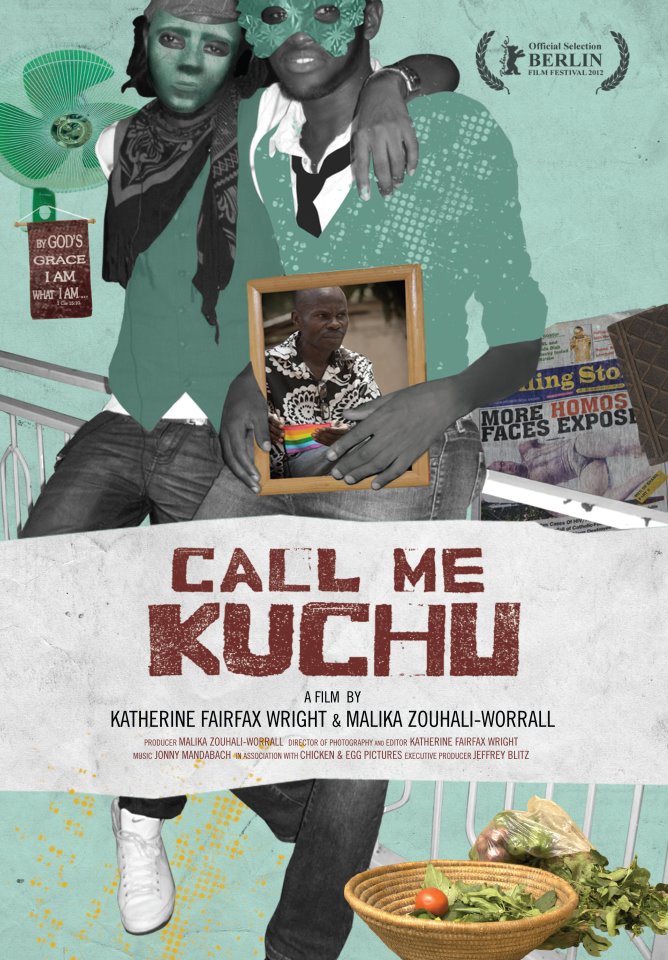
Review: Call Me Kuchu

Originally published on www.biggaypictureshow.com


Call Me Kutchu takes an intimate and thought provoking look at the state of affairs for members of the LGBT community in Uganda, against the backdrop of the kill the gays bill.
In recent years the world has become aware of the negativity shown towards gay men and women in Uganda, and this film shows us what activists in the country are doing to try and make inequality a thing of the past. It also shows us the final year of gay rights activist David Kato towards the latter half of the film, which will evoke strong emotions from the audience, some of you may even cry.
The documentary is an eye opener for those of us who live in the West that don’t realise how easy life is compared to that of many around the world. In the documentary we hear a number of harrowing tales from a select group of gay people and activists in Uganda that range from violence, stoning, abandonment and even rape. Some of these tales will leave you open mouthed and shocked that nearly 50 years after gay liberation started, some people are still subjected to persecution on a daily basis. The realisation of just how severe things are in Uganda is shown when David Kato is murdered and the scene that ensues at his funeral.
One thing that is particularly good about this film is the way in which directors Katherine Fairfax Wright and Malika Zouhali-Worrall show us the debate on homosexuality in Uganda from both sides. We see the negative affects it has on people on a daily basis and what they are doing in the fight for equality, but they also enable us to see the mind-set of the people trying to oppress them and how they are targeting gay people. This is most evident when we are told by the managing editor of The Rolling Stone newspaper that in the name of journalism, they would ignore the right of privacy to expose gay people for public knowledge, and also how the paper itself links gay people to terrorism.
However against the sadness of the documentary you see hope in the LGBT community, as they enjoy themselves together and remain positive in a shared optimism that one day Uganda will be fully equal.
Overall the film is a touching and informative human tragedy that will have you engrossed from beginning to end, and cheer when you see just how much progress they are making. But as they mention throughout the film the struggle continues.

08/05/2012

Taste of their own medicine? More like heterophobia


After the recent revelation that a gay bar in Sweden has barred straight couples from kissing within its premises, you can’t help but think are we going backwards and not forwards in our fight for equality.

It was revealed that a woman was told she could not kiss her boyfriend at the Never Mind bar in Copenhagen and that the owner could decide “who can kiss and who can’t kiss in the bar.” (Read here)

The thought that after years of fighting for equality and dealing with prejudice ourselves as gay people for kissing the one’s we love in public, that a gay bar can outright ban straight people from kissing is completely shocking. It appears that some people are now giving off the same intolerance to straight people that we ourselves have suffered.

Last year a gay couple were kicked out of a bar in Soho for kissing, which sparked outrage within the gay community and lead to the now infamous kiss off outside said pub. The act was deemed as homophobic by many within the gay community, but is this act of banning straight people from kissing in a gay bar heterophobia or just giving them a ‘taste of their own medicine?’

You can see where they may be coming from as there are plenty of bars and clubs deemed as straight where heterosexual people can meet, dance and have a good time, just like us gays can at a gay bar. But do we really want to be sending out the message that we are just as intolerant as the people who have victimised us for decades? The answer is no, we don’t.

By doing this it just opens up many more reasons for people to victimise us, which could may allow for more gay people to be banned from kissing at ‘straight’ bars, which will ultimately send us back to the dark ages where the only places we can purely be ourselves is in a gay bar. and for many the nearest gay bar isn’t around the corner.

If we as a gay community want to continue moving forward in our fight for world wide equality then this sort of thing shouldn’t happen as we should continue to show our heterosexual counterparts that we are tolerant and accepting of everyone, just like they should be. In other words we should lead by example.

29/09/2011

Icons: Antony Grey

Originally posted on www.differentscene.co.uk


In the last two sections on gay icons we’ve mentioned two men from the entertainment industry, this week I’m looking at something completely different, Gay rights activist Antony Grey.

Often regarded as Britain’s first gay rights activist due to his central role in pushing through the 1967 Sexual Offences Act, Antony Grey was born Anthony Edgar Gartside Wright on October 6th 1927 in Wilmslow Cheshire, he chose to adopt the Pseudonym Antony Grey in 1962 fearing the dangers of police attention for campaigners of gay rights, during a time when being homosexual could result in life imprisonment.
After winning a place at Magdalene College, Cambridge, where he studied history, Grey left with his degree determined to fight the laws that he said had destroyed the genius Oscar Wilde, and brought misery to thousands of otherwise blameless men.
Oscar Wilde himself had been imprisoned due to section 11 of the 1885 Criminal Amendment Act, which had become known as “the blackmailers’ charter”, along with the Vagrancy Act of 1898 which had made it illegal for homosexual men to do so much as flirt.
After leaving college Grey worked for the British Iron & Steel Federation, that later dissolved into British Steel. During his time here he also began voluntary work for the Homosexual Law Reform Society (HLRS), where he began lobbying for gay equality and to change the laws that criminalised gay men.
After two years in 1960 he became the society’s honorary treasurer and then later became its secretary by the end of 1962, which he continued to do for the next two decades.
During his time there, he was one of the driving forces behind the groundbreaking 1967 Sexual Offences Act. Although he was not happy with the changes made to his original draft legislation which had made it no where near as liberal as he had proposed and wanted, it did include the passage that said, “not withstanding any statutory or common law provision, a homosexual act in private shall not be an offence, provided that the parties consent there to and have attained the age of 21”.
Due to his help in pushing this Act through, it paved the way for other groups such as the Campaign for Homosexual Equality, the Gay Liberation Front and Outrage, to change the laws and attitudes further and further, during the course of the last 40 years.
Along with working for the Homosexual Law Reform Society he also ran the Albany Trust, a charity that helped gay men who had developed psychological problems from being persecuted, before retiring as its director in 1977, but remaining a patron for the remainder of his life.
In his later years he also qualified as a therapist and ran his own blog, along with serving on the executives of the National Council for Civil Liberties and the British Association for Counseling and Psychotherapy. Along with this he was the author of several books that included a memoir Personal Tapestry and Quest for Justice about the 1967 Act.
Later in life he became hurt due to being written off as a trimmer and compromiser, who gave away too much to get the 1967 Act through, that was seen as imperfect by people who didn’t understand the anguish of the 1950s.
After Grey’s death, on April 30th 2010 gay rights activist Peter Tatchell said that he didn’t “believe in the honors system but it is absolutely outrageous and despicable that he was never offered even an OBE, let alone the knighthood that his work for homosexual equality merited”, before adding “I salute Antony Grey and his trail-blazing contribution to LGBT equality and human rights. We all walk in his shadow. Even though he hadn’t been recognized within the honors system for the great things he did for gay rights, the gay community has honored him and in 2007 he was named Stonewalls ‘Hero of the Year’.
When collecting his award Grey said, “The road to homosexual emancipation which I and a few others embarked upon following the Wolfenden Report has been a long and arduous one,” he said in accepting the 2007 award. “But now here we are, and we can be thankful for what has been achieved. At least, we are able to celebrate our identities in this magnificent building, instead of being thrown off the top of it for being who we are — as some of our enemies would like to happen. But the price of liberty is eternal vigilance, and ours is a never-ending struggle not just for our own rights, but for human rights.”
As you can see this man lead an incredible and inspirational life, which has allowed all of us to able to live how we want and have the same equal rights as our heterosexual counterparts, some people don’t even know his name but we owe so much to him.

23/09/2011

The Importance of Gay Marriage

Originally posted on www.twomenonacake.com


Gay marriage is a hot topic everywhere you go, over the last few years it has been one of the biggest things people within the gay community have been discussing and one of the biggest subjects discussed outside of the gay community as well.

A few years ago I was one of the number of people who didn’t really care about the prospect of gay marriage, because as I’ve already mentioned before I found it to be an outdated institution and always believed in the thought that you don’t need a piece of paper to show your love for someone.
But as I’ve got older I’ve come to realise that gay marriage is so much more than just a piece of paper, it is about a human right, a given right to prove your love and commitment for someone, all in all it is about equality and that is one of the biggest things that not just the gay community but people from all over the world have strived for, day after day for the best part of the last 100 years.
I mean if people today considered not giving women a vote or not allowing someone of different racial background to sit next to a white person on a bus it would be considered an outrage. So why is there still this huge negativity thrust towards two people of the same sex to get married?
You only have to look at the California and Proposition 8 to realise just how bad things can get when it comes to gay marriage, what gives these people the right to tell two people they cant cement their love like any other person with marriage? The answer to this is nothing, nothing gives them the right, it is your right as a human being to be allowed to get married to who ever you want and when.
Gay marriage is also good for the economy, you only have to look at New York where gay marriage has recently been legalised, because of this the city is expected to see around 63,000 people get married and generate over $100 million for the economy. See our money is just as good as any one else’s.
As a young person who recently got engaged I am lucky that I live in the United Kingdom where there hasn’t been the fuss over two men getting married like there has been in certain states in America, but even then we aren’t totally equal as we can only enter into a civil partnership, but it is a start, who would have thought you would even be able to do that back in 1960 when being gay was still illegal.
It may seem like full gay marriage may take a while before it is completely legalised but if you stand up for your right to love and your right to marry the person you love then it will happen, because at the end of the day equality is important and that makes gay marriage hugely important to everyone in our community.