Showing posts with label Judy Garland. Show all posts

13/03/2013

My Favourite Foreign-Language Track: Edith Piaf – Non, Je Ne Regrette Rien

Originally published on www.sosogay.co.uk
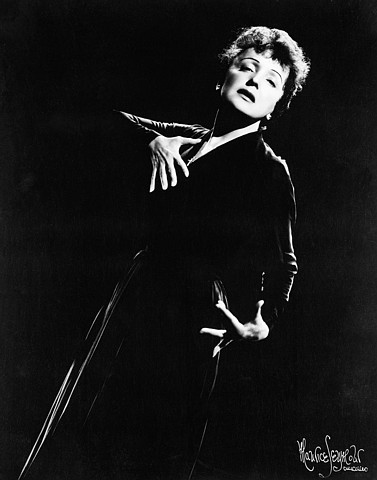
It’s not often that a foreign-language song becomes big in any music market other than in the one it was originally released. Occasionally we get song’s such as PSY’s ‘Gangnam Style’ or ‘Joe Le Taxi’ by Vanessa Paradis that manage to break into other markets and become commercially successful worldwide. Though these seem to come by once every so many years, one foreign-language song that became known worldwide and has also stood the test of time since its release over 50 years ago, is ‘Non, Je Ne Regrette Rien.’
The troubled yet endearing French singer Edith Piaf, whose other famous songs include the widely covered ‘La Vie en Rose’, sang the song. Piaf herself has received a little bit of a career revival over the last decade with the release of the film La Vie en Rose, a biopic about her life that won lead star Marion Cotillard the Academy Award for Best Actress.
However, despite the success of the film it’s the song that has become widely used in recent years. Many may be familiar with the song as it was the final one used in the film. Alternatively, you may have heard it on the advert for Specsavers, which was a strange choice to say the least. Some may also remember the cover of the English language version by Janey Cutler on Britain’s Got Talent.
The English language version translates to ‘No Regrets’ and has been covered by stars such as Shirley Bassey and Elaine Page, who also played Piaf in the stage show based on her life. But where as the English language version is good, it just doesn’t compare to the original by Piaf.
The song talks about having no regrets, and this being sung by a singer who struggled with morphine and alcohol addiction, endured several near-fatal car crashes, entered rehab multiple times to no avail and was seemingly unlucky in love most of her life, you can feel the passion and conviction in her voice as she sings, apparently about her own life, all the time letting the audience know they shouldn’t regret a single thing.
In a way, due to her fame and struggles, Edith Piaf is almost the French version of Judy Garland and this song is her version of ‘Over the Rainbow.’
Despite the translated versions being sung by great singers, which also means I can understand them better, when it comes to passion and conviction in a song it doesn’t matter whether you can understand the lyrics or not, you can hear it in the vocal performance and that is definitely true of ‘Non, Je Ne Regrette Rien’, which is why it is my favourite foreign language song.

07/02/2013

The Pink Pound and the Music Industry

Originally published on www.vadamagazine.com


In today’s music industry many artists dominating the charts take time out to lend their voice to good causes. They may relate to problems such as world famine, body issues, war and lately even gay rights. This may seem like something truly commendable as famous individuals lend their name (and hundreds of thousands of twitter followers) to a cause in order to give it a greater voice. However, in relation to gay rights just how much of this advocacy is truly on behalf of those suffering and how much is for personal gain?
This may sound a little cynical to some who believe these stars are truly helping gay men and women across the world become more accepted, which to extent they are. However, whilst having a big name star promoting a cause is a guaranteed way to make a mark for it, for the star it is also a way of gaining yourself a loyal fan base that will stick by you. The audience think you ‘get them’. The cynicism enters when thinking about gay men and women as the power of the pink pound and its appeal to PR executives everywhere is remarkable. Leading mostly metropolitan lives and statistically freer from the financial black-hole of childrearing, our demographic are often thought to have more disposable income. For many this is mostly true.
When you think about gay rights advocacy and celebrities today, one of the biggest stars that come to the forefront of most people’s minds is Lady Gaga. Now I am by no means accusing her of not believing in equality for everyone, in fact she has done quite a lot over the last few years to help LGBT advancement, but you cannot help but feel there is a slight marketing push behind it.
After watching her concert on DVD you are left with the feeling that the chanting about gay rights is a little too much overkill. Sometimes it feels as though she is trying too hard to ensure that those in the audience who are gay know that she loves them. Also when you listen to her album Born This Way, the running theme of gay rights throughout it is incredibly obvious, so much so that it starts to annoy you. It has to be said that the title song of the album was a brilliant way to gain exposure across the world for gay rights (I know it advocated rights and equality for everyone but the message for the LGBT community was much stronger), but also a great way to guarantee gay men and women would buy the single and the album and that it would be played as a gay anthem for years to come.
Now I do not want this to sound like I am ripping into Lady Gaga, after all she wouldn’t be the first star to have a large gay following, although she seems to be one of the first to specifically target them. That said her predecessor Madonna did this but in a much subtler way.
‘Vogue’ was a massive hit worldwide back in 1990 and it is well known now that voguing was very popular on the New York gay scene. Madonna helped bring this facet of gay subculture into the mainstream. However, back then it would have been much harder to publicly back LGBT people through song in the way Gaga has today due to widespread homophobia, the legacy of the HIV/AIDS epidemic of the 80s and the fact that as a community, equality was still a long way away in many more countries than it is today.
So when you look at it that way pandering to a gay audience has been going on for some time, whether it has been obvious or not. Rewind to the 50s and 60s when the biggest gay icon of them all Judy Garland was selling out concerts all across the world that were known to be frequented quite prominently by gay men. However, back then there was no marketing or pandering to gays and as Judy quipped when asked about her gay following, “I couldn’t care less. I sing to people.“ I’m quite sure that if being gay wasn’t the crime it was back then, some marketing savvy individual would have had her shouting out for gay rights across the globe.
So maybe it’s not the stars, maybe it is the marketing companies and their strategic soapboxing of stars that grinds my gears. By advocating a certain fight for equality they tap into a lucrative market in an attempt to exploit it for all they can. After all, stars such as Madonna and Lady Gaga just want to sing, entertain, love their fans (so they say) and be appreciated. As most people know, companies involved in marketing, advertising and PR are out for one thing and one thing only: Money.
So yes maybe stars are pandering to the capital of the pink pound, but is it because the teams behind them are exploiting them, and in turn exploit the pockets of fans across the world? I’ll let you think about that one.

22/08/2011

Icons: Elizabeth Taylor

Originally posted on www.differentscene.co.uk

Last week we looked Judy Garland, often considered a great gay icon because of her troubled personal life. This week I’m looking at Elizabeth Taylor, but not for her highly publicised personal life.
Miss Taylor is definitely an icon of the golden age of Hollywood, that is undisputable, but it’s because of her extensive charity work and campaigning for funding for HIV and AIDS related charities and projects that give her a place as a gay icon.
Yes, she was a huge film star, starting as child actress she went on to become the highest paid actress in Hollywood in the early 1960’s when she received and unprecedented $1 million fee for her role in Cleopatra, she was also a two time Academy Award winning actress and received numerous other awards and success throughout her 60 year career. Her personal life was highly documented due to her love of wedding rings, she was married eight times and two of those were to Richard Burton.
Yes, Liz Taylor lived an exceptional life, but it was during the AIDS epidemic of the 1980’s where she gained her prominence as an advocate for the gay community and truly became a gay icon.
Spurred on by the death of her good friend and fellow actor Rock Hudson who eventually died of the disease, Taylor became one of the first notable celebrities to help raise money to help fight the disease, back in a time when a number of people still refused to acknowledge it at all. During her time as an advocate for helping to fight the illness Taylor helped raise over $270 million for HIV and AIDS related charities and projects, and set up and organised the first AIDS fundraiser back in 1984, a brave thing for someone to do back then.
In 1985 during the year that Rock Hudson lost his life to the disease, Taylor helped co-found the American Foundation for AIDS Research (amfAR) and also founded the Elizabeth Taylor AIDS Foundation (ETAF) in 1993.
Taylor was a great in woman, and by standing up for something she truly believed in back when it was still a hugely taboo subject shows that she truly embodies every notion of the word icon.
Sadly Taylor passed away in March of this year leaving behind a huge gap, as there will never be another like here.
As former president Bill Clinton said following her death, “Elizabeth’s legacy will live on in many people around the world whose lives will be longer and better because of her work and the ongoing efforts of those she inspired.”

17/08/2011

Icons: Judy Garland

Originally posted on www.differentscene.co.uk


As a new feature for Different Scene we will be profiling icons in the gay world. These people are often cited as being huge gay icons for numerous different reasons, whether it be because of their political stance, the way they’ve helped change the gay landscape or just because they have been adopted by the gay community for another reason, either way they are all extremely well known to members of the gay community.

For our first feature we look at a woman who is regularly cited as the greatest gay icon of all time, Judy Garland. Through her pain and suffering and ups and downs in both her personal and professional life, Judy is a huge star of times past and still in many people’s opinions, the greatest gay icon of all time.
Starting her life off as Francis Ethel Gumm, Judy started performing at the tender age of two and would do so for the remainder of her life. After years of performing on the stage with her sisters she was soon snapped up by MGM where she joined their roster of young talent. While here she forged a name for herself whilst staring alongside Mickey Rooney in a hand full of films, but it was a little film she made in 1939 that would cement her fame and ensure that she would forever be remembered.
That little film was The Wizard of Oz, a film that everyone around the world knows, and it was this film that provided Judy with her signature song for which she will always be remembered, Over the Rainbow.
It was this film that many consider to be the reason why Garland has become synonymous with the gay community. Her escape over the rainbow from the drab darkness of reality to a place full of colour and different people who didn’t fit society’s norms reflected the feeling of the gay community at the time, who were being repressed as homosexuality was still illegal, and for many years gay men were known as friends of Dorothy.
The film has become a lasting success and even won Judy a Juvenile Academy Award. But it was after this that things started to go bad for the young Garland.
After years of being over worked by the studios things started to take their toll on her, and she was dropped from the studio in 1946 following accounts of bad behaviour on film sets, drug use, suicide attempts and her fluctuating weight. These problems would go on to plague the former child star for the remainder of her days.
However through the pain and suffering Garland continued to bounce back, with sell out concert performances around the world and an Academy Award nomination and a Golden Globe win for her role in A Star Is Born. It was in the early 1960s when Garland truly bounced back with her performance at Carnegie sHall that is often cited by many to be the greatest night in show business history. The live recording of her performance spent week at the top of Billboard album charts and won Garland numerous Grammy awards, the album has not been out of print since.
Things looked good for her but through the success her failed marriages and other personal problems, which still included suicide attempts and drug and alcohol abuse continued to plague her, and after the cancellation of her television show, many regarded this to have been the final devastating blow to her.
Then in 1969 after years of torment and anguish Garland was found dead in her bathroom at her rented Chelsea home in London, where she had died of an overdose.
Like the 1960s version of Amy Winehouse, Garland was a true talent whose star burnt bright but burnt out ever so quickly.
Looking back on it now you can see why Judy has become such a prolific gay icon, her suffering and torment as a woman in a mans world emulated the suffering that gay men at the time were experiencing for not fitting the norm, and it has often been widely rumoured that Garland’s death was one of the triggers to the Stonewall riots back in 1969, but that is still just a myth.