28/02/2013

No Room at the Inn

Originally posted on www.vadamagazine.com


Living in the UK, where equal rights for gay people are exceptionally better than many other places in the world, and where the debate for equal marriage has gained continued momentum, things only look like they’re going to go from strength to strength for LGBT issues. However, despite this there remains a certain degree of discrimination shown towards members of the LGBT community on a regular basis that we hear about in the news.
Just this week it emerged that a gay couple were refused a double room at a hotel in London by a receptionist who asked them numerous times: “are you sure you don’t want single beds?” (Nick Hurley, the person in question is pictured above).
Despite booking their room online, one of the men in question explained how he felt he and his partner had been treated in a homophobic way.
I doubt the same treatment would have been given to a straight couple if they arrived at a hotel room looking to share a bed.
However this treatment isn’t isolated to one particular case, but instead we can find a string of numerous news stories that highlight this type of treatment given to gay people.
Last year a gay couple won a court case against the owners of a B&B after they were turned away, despite booking the room and paying a deposit, because one of the owners claimed that allowing them to stay would violate her religious beliefs.
There were also two separate incidents in 2011 where a lesbian couple took legal action against a hotel after they claimed they were turned away for being gay. 2011 also saw the gay kiss pub protest after a gay couple were thrown out of the John Snow pub in Soho for kissing, which was called “obscene.”
Another incident in January 2013 saw a gay couple denied access to a bar because it was “couples only” and they were the wrong type of couple.
It’s awful to think that in 2013 some people still feel they can deny basic forms of equality such as sharing a bed or accessing a bar, simply because someone is gay. This in spite of The Equality Act making it illegal to refuse people goods and services on the grounds of sexual orientation.
Could you imagine if the roles were reversed and a gay person or couple denied a straight couple a hotel room simply because they were not gay, or if a person who doesn’t like children refused a family a table in a restaurant or a room at a hotel because they had a child? Well you couldn’t because this thing would probably never happen as it would be deemed ridiculous. Yet some people still think it’s OK to deny gay people basic rights.
The Thistle hotel involved in the incident in London has apologised to the couple involved, with spokesman Chris King telling ITV News: “From our initial investigations it appears that the couple booked through an online booking system which didn’t work properly and so when they arrived at the hotel there were no double rooms available. We are very sorry if the couple feel they have been badly treated and we are now looking into the situation.”
He added: “Having spoken to Mr. Hurley we understand that the couple were not too upset that there were no double rooms available, but rather with the manner in which this information was conveyed. We have offered them a free night in one of our hotels but they have refused this offer. Thistle does not tolerate homophobic behaviour and will investigate this matter thoroughly.”
Where as we can see public apologies being made and public protest, particularly in the incident with the Soho pub through the now infamous kiss protest, these are only the incidents we know about. Many people still feel as though they can’t come forward with their stories because they are scared or feel that there is no point, as nothing will be done.
But as we can see things are getting noted and acted upon, there is definitely a need to speak up and say something. Issues involving gay people are now being covered much more frequently by the press, and not in a negative manner, because gay people aren’t taking it anymore. People have been fighting for full equality for years and finally it looks like we may not be far from it, in the UK anyway.

When Procrastination Turns Into Laziness

Originally posted on www.huffingtonpost.co.uk


Procrastination is something that I have become a master of over the last few years, which began in sixth form when certain tasks become a priority over my coursework for my A Levels. However at the time I was unaware that this was the development of my status as the procrastination king.
As I went to University I began perfecting this art. As many University students will know, when it comes to gathering a pile of books to find information and quotes to help develop a 2,000 word essay, menial tasks suddenly become the most important things that ever existed. You tend to find yourself taking your clothes to the washing machines knowing that in an hour they will need to be put in the tumble dryer, this means that for the next few hours you can't actually start your essay as you will need to go to the tumble dryer and move your clothes and then ultimately have to bring them back and put them away.
This is only one of a number of tasks I found myself doing during the first two years of my University life, one time I found myself on my hands and knees cleaning my bedroom skirting boards, as they looked a little too dusty. The fact that I had a deadline in a few days time obviously had nothing to do with my sudden need for a spring clean, well that's what I told myself.
I know a whole host of people from my time at University who also found they succumbed to the need to complete pointless tasks in order to delay thinking too much about their essays. However luckily for me by the third year I had grown out of this phase, as I wanted to get my work done and attain a good grade, since this was the main reason I went to University in the first place. I also know that a number of my fellow students grew out of this as the workload got heavier and more important.
This was a good thing as the constant work made sure I couldn't get too distracted, obviously now and again updating my Facebook status became much more important. But overall this art of procrastination was beginning to go as I prepared myself for the workload I would endure when I was finally finished with my studies, and entered the world of full time work.
However for me, like many other graduates things didn't manifest as I'd hoped and I found myself sitting at home applying for copious amounts of jobs praying for the day I'd start work. This therefore brings me to a key point, when does this art of procrastination stop being procrastination and become laziness and more importantly does having nothing to do breed laziness?
I say this because when I was at University procrastination may have distracted me from my studies but it also meant that tasks such as the washing the dishes or doing the laundry got done, and in the end so did my assignments. But now that I am out of University with no assignments I don't find myself becoming distracted by the washing, therefore it doesn't get done as much as it used to.
Now I find myself sat on the sofa, drinking tea, applying for jobs and watching the TV, in a state that many people would call laziness. Its not that I am lazy, in fact I love being busy as I'm sure many other people do, it's just that I have nothing to do, so by having nothing to do these menial tasks become the only thing I have to do and once they are done they are done, leaving me with extra hours to sit around and do nothing.
The way it feels is that whilst the job market is in such a bad state, meaning that many graduates and people in general can't get jobs, leaving them at home with nothing to do after they've done their tedious tasks and applied for all the jobs there are to apply for, which isn't many, they find themselves slipping into a state of being bored where doing nothing is the only thing to do.
With more and more people being out of work for much longer periods of time, and by having nothing to do its looks as though the inability to get many people into work is breeding a generation of experienced laziness as their main skill, not because they are lazy but because it's the only thing they now know how to do.

Review: Call Me Kuchu

Originally published on www.biggaypictureshow.com


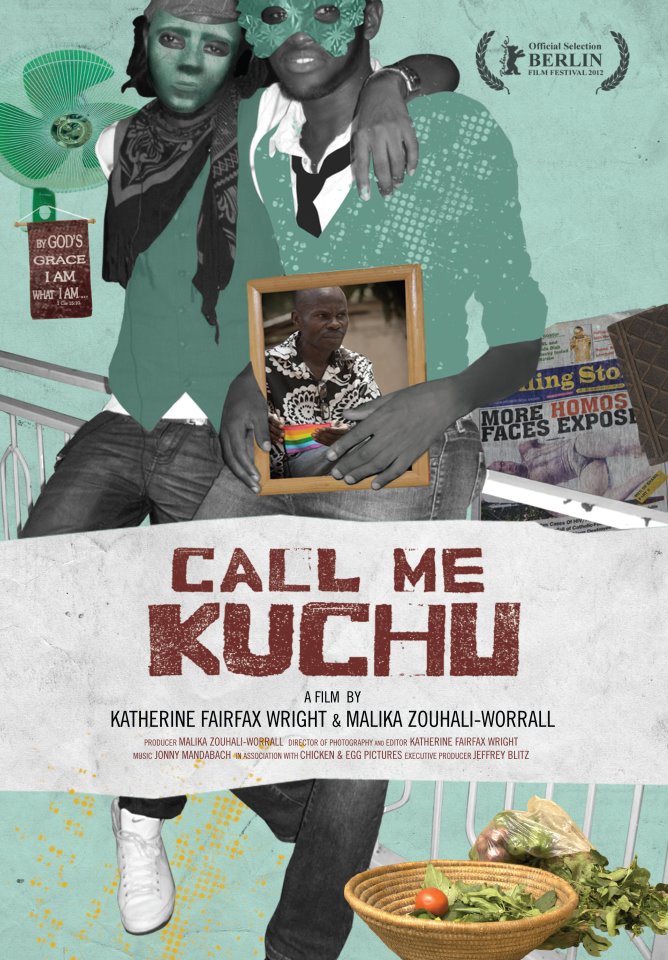
Call Me Kutchu takes an intimate and thought provoking look at the state of affairs for members of the LGBT community in Uganda, against the backdrop of the kill the gays bill.
In recent years the world has become aware of the negativity shown towards gay men and women in Uganda, and this film shows us what activists in the country are doing to try and make inequality a thing of the past. It also shows us the final year of gay rights activist David Kato towards the latter half of the film, which will evoke strong emotions from the audience, some of you may even cry.
The documentary is an eye opener for those of us who live in the West that don’t realise how easy life is compared to that of many around the world. In the documentary we hear a number of harrowing tales from a select group of gay people and activists in Uganda that range from violence, stoning, abandonment and even rape. Some of these tales will leave you open mouthed and shocked that nearly 50 years after gay liberation started, some people are still subjected to persecution on a daily basis. The realisation of just how severe things are in Uganda is shown when David Kato is murdered and the scene that ensues at his funeral.
One thing that is particularly good about this film is the way in which directors Katherine Fairfax Wright and Malika Zouhali-Worrall show us the debate on homosexuality in Uganda from both sides. We see the negative affects it has on people on a daily basis and what they are doing in the fight for equality, but they also enable us to see the mind-set of the people trying to oppress them and how they are targeting gay people. This is most evident when we are told by the managing editor of The Rolling Stone newspaper that in the name of journalism, they would ignore the right of privacy to expose gay people for public knowledge, and also how the paper itself links gay people to terrorism.
However against the sadness of the documentary you see hope in the LGBT community, as they enjoy themselves together and remain positive in a shared optimism that one day Uganda will be fully equal.
Overall the film is a touching and informative human tragedy that will have you engrossed from beginning to end, and cheer when you see just how much progress they are making. But as they mention throughout the film the struggle continues.

How Music Gave Gay People a Voice


Originally published on www.sosogay.co.uk
We’ve heard a lot of talk through our lives about how people and certain aspects of culture have helped change perceptions of gay people. From films such as Cabaret and Brokeback Mountain to people like Antony Grey and Peter Tatchell, and of course there are the Stonewall riots.
But one thing that has been a constant throughout the fight for equality is the sound of music, and I don’t mean the Julie Andrews film. Music is a way of connecting people from a broad range of social backgrounds as it expresses pain, emotions, determination and everything else in between and has certainly given many gay men and women across the world a voice over the years. Not only that but many of the artists have helped give us representation in the public eye for quite some time now.
Before and up to the mid 1960s it would have been pretty hard to release a record such as Lady Gaga’s‘Born This Way.’ During this period, many gay men attached themselves to songs such as ‘Over the Rainbow’ and ‘The Man That Got Away’ by Judy Garland, who is often considered a gay icon due to her struggles, which many gay men identified with. But back in the 1960s there was a counterculture big enough to see the release of some records that are now seen as gay. The book From the Closet to the Charts: Queer Noises 1961 – 1978 documents this and discusses a number of records such as ‘The Shower Song (I’m So Wet)’ that would have apparently embarrassed the Village People, and even an openly gay record label called Camp, which saw the release of 10 singles and two albums.
Music itself hasn’t always been as ‘straight’ as many would think. Openly straight songs about men and women falling in love dominated the charts back then, but you have to remember that during 1960s America black people had their own separate music charts. The mainstream industry was very straight and white then; some people didn’t even like the birth of rock ‘n’ roll.
However, as music progressed into the 70s and 80s it got a little more ‘queer’. We saw the birth of disco and glam-rock; filled with sparkles, platform shoes, big hair and men in make-up, and we saw gay men hit the charts and gay songs do very very well.
One of the most well-known and arguably most pivotal moments of the 1970s was David Bowie’s ‘I’m Gay’ interview in Melody Maker, which finally saw music come out, so to speak. However, years later Bowie stated that there was a backlash in America, but there’s frequently some kind of resistance over there. You only have to look at the controversy Adam Lambert caused during the 2009 American Music Awards – where he kissed a man on stage, prompting ABC (the American television network that aired the awards) to receive over 1,500 complaints and cancel Lambert’s performance on Good Morning America – to see just how shocking something like this would have been in the 1970s. Still, we progressed and music helped in our fight. Hits like ‘Y.M.C.A’ proved popular across the world, despite the majority of the straight population not realising that the song was referencing the YMCA’s reputation as a gay hook-up and cruising spot. Similarly, Sylvester burst onto the scene with ‘You Make Me Feel (Mighty Real)’. With a black, gay drag queen now lighting up the charts we can see just how far music had progressed, and the exposure Sylvester gained for gay people should never be overlooked.
It’s no doubt that Sylvester helped inspire a barrage of gender bending stars of the 1980s. As the MTV generation was born, singers like Boy George, Steve Strange, Pete Burns and in many ways Annie Lennox – whose androgyny blurred the lines of what it was to be male and female – burst into the mainstream with their highly popular music videos showcasing a new non-traditional image for all to see. The decade saw gay people get a huge voice through music as Frankie told everyone to relax and Bronski Beat let the small town boys know they knew exactly how they felt. The 1980s saw the thumping sounds of so called ‘gay music’ burst onto the scene and dominate the charts the world over; I can just imagine the faces of many a bigot flicking on their TV sets to see Divine singing ‘You Think You’re a Man.’
Despite the negativity of the AIDS crisis, gay men and women were still fighting hard throughout the 90s, but not without a little help from the power of song. As Melissa Etheridge came out and Brian Molko and Billie Joe Armstrong announced their bisexuality, the queen of pop Madonna was bringing ‘voguing’ into the mainstream straight out of the gay clubs of New York. Not only that but she also released the very provocative ‘Justify My Love’ video featuring gay men. Despite the fact it was banned on MTV it was still out there and managed to become a huge hit. But one of the most significant parts of the 1990s, in terms of LGBT visibility and music, came from the overly camp Eurovision. Out were the days of Cliff Richard and Sandy Shaw with their wholesome images and in was Dana International, the transsexual Israeli pop singer and winner of the 1998 Eurovision Song Contest. By now we had moved a long way in terms of freedom and rights and music had progressed and indeed helped with it, but this was only the beginning.
As we swung into the 2000s gay people were out and proud; gone was section 28, in America Don’t Ask Don’t Tell was finally repealed in September 2011 and gay marriage has been a hot topic around the world for many years. In terms of music, we saw t.A.T.u hit number one on the charts, despite using lesbianism as an obvious marketing ploy, and Madonna kiss Britney Spears at the 2003 VMA Awards, in one of the most memorable moments in music history. By now it wasn’t just gay men making a splash, lesbians were also edging into the mainstream despite only having a few moments previously in terms of music. With acts like Will Young selling millions of records, and gay men and women popping up in the finals of massively successful programmes like The X Factor, it became apparent that gay musicians were now firmly a fixture on the charts.
We also witnessed many anthemic songs appear in the last 10 years – ‘Beautiful’, ‘Firework’, ‘Standing in the Way of Control’, ‘Born This Way’ – and gay men and women were being featured in music videos more frequently too (just watch Kylie Minogue’s ‘All The Lovers’ below). It’s clear to see just how music has helped shape the way gay men and women are viewed, not to mention giving them a platform on which to be noticed.
From the days of being closeted and listening to Judy whilst a sub-culture was being born, to the openly gay pop stars and songs telling us to embrace ourselves and love who we are, we’ve come a long way in our fight for equality and music has undoubtedly played a prominent part in that.

25/02/2013

Review: Coasts - Oceans

Originally published on www.sosogay.co.uk

With their début single ‘Oceans’, Coasts grab your attention from the very first second of the song. Taken from their limited edition début EP Paradisethey give us a great mix of sad, melancholic and atmospheric music and lyrics, but manage to counteract that by making the song hopeful and happy at the same time – a rare ability that recalls the stylings of Mumford and Sons.
With the echoing chant style chorus the band demonstrates that they would be excellent live (and are currently on tour) and you could imagine thousands of people singing along to this at a festival – a good way to judge the merit of a single. Luckily this one passed the festival sound test.
The music itself lives up to the band and the singles names as they sound very water inspired, which is a nice touch. Although they do sound like a number of other indie bands around, the song is very catchy and sounds fresh and new.
This is a great single and an even better début single. Hopefully, off the back of big Grammy wins by bands such as Mumford and Sons, the British public will be looking for something new again, and they need look no further than Coasts.


Liza Minnelli's Latest Comeback

Originally published on www.sosogay.co.uk

With an Oscar, an Emmy, multiple Tony Awards and a Grammy Lifetime Achievement Award under her belt and over 50 years in the business that is show, Liza Minnelli is the definition of the term ‘living legend’.
Not content with sitting out her later years on a vast yacht in the baking sun telling stories about all the other greats she’s known – such as her mother, her father, Frank Sinatra or Sammy Davies Jr. – Liza continues to keep busy, and this year is no exception as she brings her celebrated gifts to the London stage for a one-night-only performance on March 1.
Minnelli will be performing at the Royal Festival Hall in London as part of the Southbank Centre’s ‘Berlin in the 20s and 30s’ weekend, where she will perform songs from the legendary Cabaret, jazz standards and Broadway tunes. However, as she mentioned in The Telegraph, she’s still re-writing the show, so who knows what could happen.
The performance at the Royal Festival Hall will be her first performance at the venue since 1973, when she performed her renowned Emmy Award winning show Liza with a Z there.
The weekend will also see a screening of Cabaret, which celebrates its 41st birthday this year and marks the 40th anniversary of Minnelli’s Oscar win for her performance of Sally Bowles.
Aside from her one night engagement in London, this year appears to mark another comeback in the life of the legendary performer. With scheduled performances at the New York City Town Hall alongside Alan Cumming, a performance at the State Theatre’s 25th annual benefit gala in May, a return to acting with a guest appearance as herself in TV shows Smash and Arrested Development and even, according to an interview with The Huffington Post, a new album in the works, it looks like Liza may be doing a few more appearances this year. Well here’s hoping she does.

22/02/2013

Dying for an Appointment

Originally published on www.huffingtonpost.co.uk


For a while now I've been seeing a number of debates online surrounding medical care in the UK, whether its about budget cuts, the issue of privatising the NHS or a number of problems surrounding the treatment of patients, which largely concentrates on the negative aspects of care some people have received. However something I rarely see, which is something that I've experienced recently, is the complexities of trying to get an appointment with your GP.
Recently after experiencing some problems I contacted my doctor's surgery to try and book an appointment, this to me seemed like a very straightforward task that would involve a telephone call and arranging the appointment. I'd already considered the fact that I may have to wait a few days, but as usual nothing is completely straightforward.
During my telephone conversation I was told that the earliest appointment I could have was the 1 March, which would have been fine if it was a few days before. However I just happened to be ringing three weeks before the given date, which to me seemed very strange. When I enquired about getting an earlier appointment I was told that they were fully booked until then, a phrase I thought was reserved for hotels, restaurants, hairdressers and the sort. Then when I mentioned that I'd been having a pain in my chest the receptionist, in a very rude manner, told me I should go straight to the hospital before saying goodbye and hanging up.
After this happened I was in total shock. I know if you experience pains in your chest then you should go to the hospital, but as the pain had been happening for a few days I was quite sure it wasn't a heart attack, hence my delay in approaching the hospital. It's also worth noting that a few months back when my partner had experienced extreme chest pains and we went to the hospital, he was told at A&E he should have gone to his local GP first. Talk about mixed messages.
The whole situation is baffling as it would appear the GP surgery expected me to predict and schedule the days that I was ill, I know this isn't the case but given the way I was told they were fully booked this is how it felt. I was also rudely told on the phone that to get a quicker appointment I would have to ring the next morning at 8am, which tells me and anyone else who has experienced this that the GP surgery did in fact have appointments, which they could hand out instead of making countless potential patients angrily tap away at their phones the next morning in an appointment bidding war.
I have actually done this before and it took around 68 engaged phone calls in four minutes before I actually got through to a person, at which point I couldn't get an appointment until 4pm.
Now many may blame this type of treatment on budget cuts or privatisation, but for as long as I can remember it has been like this. I can even remember my own mother enduring the telephone bidding war when I was younger to try and gain an appointment for the illness that she had so inconsiderately miss-scheduled.
It is a sad state of affairs that many people who are unwell and may in fact have a more serious underlying condition have to wait weeks on end to see their GP, by which time it could be too late. You could go to the hospital where like I previously mentioned you will be told you should have seen a GP first, be made to feel like you're wasting valuable hospital time and resources only to find out that there's nothing to worry about. You also get to find this out after an eight-hour wait, which is always a lovely experience.
Sadly there's nothing that can be done, and it looks like this is going to continue if the frightful news stories about the NHS and doctor's surgeries are to be believed. However I did file a complaint with the surgery on the day that I was denied an appointment as there was no room at the inn, but as you may have guessed I'm still waiting for a reply, which I won't hold my breath for as I may not be able to get an appointment for the lack of oxygen in body whilst doing so.

21/02/2013

Is Football Truly Becoming The Beautiful Game At Last?

Originally published on www.vadamagazine.com


The beautiful game took another step out of the middle ages this week when American international and former Leeds United footballer, Robbie Rogers, came out of the otherwise bolted football closet.
The former midfielder made the announcement that he was gay through his own personal website after he tweeted “just getting some sh*t off my chest” with a link to the web post. In the post he went on to discuss how he’d had fears about coming out as he didn’t want the fact he was gay getting in the way of his dreams, which he went on to discuss: ‘Dreams of going to a World Cup, dreams of The Olympics, dreams of making my family proud. What would life be without these dreams? Could I live a life without them?’
By coming out Rogers has become the most high profile football star to come out since Justin Fashanu did back in 1990, and makes him the second out footballer playing professional football next to Anton Hysen.
However, being one of only two openly gay professional footballers in the world was short lived as Robbie also announced his retirement from football, stating: ‘Now is my time to step away. It’s time to discover myself away from football.’
This action however makes the move a little counter productive. By coming out Rogers was making one of the biggest leaps in terms of professional football, which could be compared to the move Gareth Thomas made when he came out in 2009, and for sport as a whole. But by announcing his retirement it’s prolonging the myth that if you’re a footballer then you can’t be gay, as Rogers is now an ex-footballer.
Maybe the terrible tale of Justin Fashanu, who came out in 1990 and faced a barrage of negative publicity before committing suicide in 1998, still sends fear through the minds of gay footballers even today, which would explain why a footballer coming out is a very rare occurrence. Although if Rogers had stayed in the game, maybe he could have debunked the myth and taken an even bigger step for gay footballers than he already has. There was even discussions on Twitter commenting on how Rogers had quit football and then come out, with journalist Charlie Beckett saying: ‘Brilliant for coming out, shame he couldn’t stay in the game.’
But despite this negative aspect to the news of Robbie Rogers coming out, the former player has been bombarded with positive responses via Twitter from fellow footballers and others from around the world, which proves that the world of sport is changing and has changed significantly since Fashanu came out all those years ago.
The news about Rogers coming out isn’t just a big move for football, but a big move for sport itself, which has seen a number of considerable movements towards equality recently. Brian Ellner from gay rights group Athletes Ally, which campaigns against homophobia and transphobia in sport told Reuters: ‘We’re at a tipping point.’
Recently the world of sport has seen Orlando Cruz come out, making him the first professional gay fighter, we’ve seen over 100 professional hockey placers say they’d support an openly gay team mate and footballers Gareth Southgate and Matt Jarvis have both mentioned how football is ready for openly gay players.
Maybe it isn’t the players holding total acceptance back as they all share a love of sport regardless of sexuality, maybe it’s not even the fans who get criticised heavily for not allowing players to come out, surely they just want their team to win. It looks as though footballers, their team mates and their fans are ready to accept gay players in football and other sports for that matter but why aren’t gay footballers, hockey players and gay athletes in general coming out? For football maybe it is the harrowing story of Fashanu, but the more likely reason is because of the sponsorship deals and the PR surrounding them.
If gay footballers are seen to make less money from sponsors or not get sponsors at all, then surely their PR man isn’t going to want them to come out for fear of making less money, even Max Clifford has spoken about how he has advised footballers to stay in the closet.
From what’s happening around the world at the moment maybe we are at a tipping point, after all players from other sports are starting to come out and straight players are defending their gay counterparts and so are the fans. Robbie Rogers may have come out and retired but from the positive reaction he’s received, maybe this action will open the door for other gay footballers to come out and finally break down homophobia in sport.

The Application Complication

Originally published on www.instant-impact.com


For those who are trying to break into the creative industries whether its in journalism, marketing, fashion, advertising or PR it can feel as though it’s easier to get through immigration or break into a bank vault, wearing a very fetching yet itchy balaclava, than kicking down that otherwise heavily padlocked door.
It’s an annoyance that will come to all of us who are trying to make it in a very difficult industry where unpaid internships, extremely long hours and a second job are the norm. But aside from the fact that for many, the majority of these jobs are located in London thus making it hard to afford the move from wherever you’re currently located, the biggest annoyance when it comes to trying to crack the creative industries is the dreaded application form.
We’ve all endured it and we’ve sighed a nauseating sigh of disbelief once we’ve downloaded the seemingly never ending questions on the application form that wants to know everything about you, the fact there isn’t a question regarding your inside leg measurement is actually surprising.
The first thing they make you want to do is scream, run away and hide under your duvet at the sheer thought of filling out this form. It’s a generally tedious task that asks you everything that is already on your CV, so after spending a large chunk of time copy and pasting your previous experience and education into some boxes that clearly haven’t been formatted properly by a company that demands excellent Microsoft Word skills in their job description, you can almost feel the laziness pour over you.
However this isn’t the end as you then have to make yourself sound like the best candidate for the job in the relevant experience section, which is just asking you to tell them how you match up to the criteria in the person spec, which isn’t only a monotonous task that can take hours but also makes you feel vastly pretentious as it makes it sound as though the sun shines out of your behind. If that isn’t bad enough the section after this asks for more information about you that you may not have covered in the previous section, so you find yourself mentioning rubbish like you once mowed your grandmothers grass and that you were a top student in primary school because you have run out of self promotion in the last section and quite simply can’t think of anything else they would want to know. Maybe you drop your inside leg measurement in as a thought.
Alas the application form isn’t the only annoying thing about applying for jobs within the creative industries. If they aren’t asking for a 500-page application form to be submitted then they’re asking for a CV, cover letter and in my case examples of previously published work. Now for many people who have to work as well as apply for these jobs they don’t have the time to have written much for other companies, because they’re either searching though umpteen pages of search results on job sites to find jobs that in then takes 3 hours to apply for, there simply aren’t enough hours in the day.
Usually after sending this they usually then ask you for a written piece that they assign to you, if they haven’t already asked for this in the first instance. The worst part is after spending hours doing this you rarely hear back or get a rejection email that can’t give feedback due to the high volume of applicants, it just makes you think “why do I even bother?”
I find myself asking what’s wrong with a simple application process of your CV and a brief hello in the email because surely they will find out if you’re right for the job at the interview? That’s if you even make it to the interview. But apparently this would make it far too easy for you and the people reviewing the applications may have to do some serious interviewing, when clearly they’d rather interview a small handful.
It’s a sad state of affairs that so many creative people are failing at cracking the industry because they just can’t get their big break due to excessive job searching and application forms, which can restrict the time to be creative and create published work, or simply because the vast size of the application form is just emphasising a wave of laziness that has already been brought on by months of daytime TV and unsatisfying menial work.

19/02/2013

Review: Fear of Men - Early Fragments

Originally published on www.soundblab.com


Self-described alternative indie-pop band Fear of Men are entering the world of albums in a very unique and unusual way. Hailing from Brighton, the quartet are releasing their debut of 90s-influenced music, which technically isn't a debut at all. How is this?, I hear you ponder to yourself. Well, the band are currently working on their debut album as we speak, but to get us excited the band is releasing Early Fragments, a compilation of previously released singles.
After releasing singles on various UK indie labels, this album contains eight songs which span their career so far, from their debut single in 2011 all the way up to the present day. The band have made quite a name for themselves after touring extensively, in fact, they are still touring at the moment, and have been compared to another indie-pop band: Veronica Falls.
Unlike albums from Veronica Falls, this is much easier to listen to. In common Veronica Falls, they do have a few singles that sound the same, but whereas you tend to zone out because the Veronica Falls singles sound similar, you just don't with Fear of Men, perhaps something to do with the fact that all the songs were singles. Aside from this comparison, the band at times remind me a little of The Cranberries. You can hear the obvious 90s influences shining through. Maybe 90s indie-pop/rock is making a comeback.
There are two songs which stand out more than the rest: 'Mosaic', with its haunting yet summery sound which makes you want to dance around and reminisce about times gone by, and 'Ritual Confession', a catchy and infectious song with brilliant music and excellent vocals which you get lost in from the moment it starts. The remainder of the songs on the album are good but don't quite match up to these two, except for 'Spirit House', which is just a yawn-inducing sleep-fest that blends into the background and makes you want to switch off. No wonder it's the last track on the album.
Aside from this, the album is good and is just enough to get you a little excited for their first full-length. However, I've heard this sound before and, with only one or two standout tracks among the already released singles, the band are going to have to turn it up a notch for their first proper album.